WELCOME TO OUR BLOG

We're sharing knowledge in the areas which fascinate us the most
click

Mining Tools: The Real Deal on What Digs, Hauls, and Keeps You Alive Underground

By globalmachex March 12th, 2026 42 views

Quick Intro—Why You Can't Just Dig a Hole

Let's be real. Mining isn't digging a hole. It's a whole operation. You've got to get the rock out, separate what you want from what you don't, and do it without killing anyone or bankrupting the company.

The tools matter because the rock doesn't care. It doesn't give up easy. You need the right machine for the right job, or you spend all day fighting the equipment instead of mining.

And here's the kicker—different minerals come out different ways. Coal is soft, so you can scrape it. Gold is hard, so you blast it. Salt dissolves, so sometimes you just pump water in and suck it out. The tool follows the method.


Answering the Main Question


First, How Do You Actually Mine Stuff?

Before you pick a tool, you need to know how you're getting the mineral out. There are four basic ways:

Surface mining is for stuff close to the top. You strip off the dirt and rock above it—that's called overburden—and dig out what you want . Open pits, strip mines, quarries—all surface.

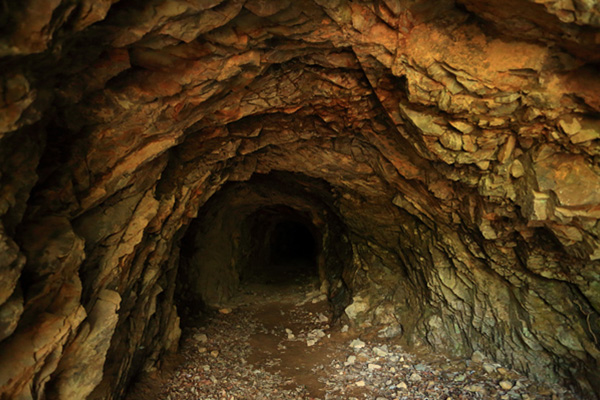
Underground mining is for deeper stuff. You go down after it. Tunnels, shafts, rooms, pillars—whole cities underground .

Placer mining is for gold and other heavy stuff. You use water to separate it from sand and gravel. Old-school prospectors with pans? That's placer .

In-situ mining is weird but clever. You dissolve the mineral underground and pump it up. Uranium often gets mined this way .

Soft Rock vs. Hard Rock—Why It Matters

Here's a simple rule: if you need explosives, it's hard rock. If you don't, it's soft.

Soft rock—coal, salt, potash, bauxite—can be cut, scraped, or chewed up with machines . Continuous miners with rotating drums and carbide teeth eat through coal like butter.

Hard rock—gold, copper, iron, uranium—needs blasting . You drill holes, pack them with explosives, and break the rock into pieces you can haul away.

The tools are completely different. Hard rock tools have to survive impacts and abrasion. Soft rock tools are about cutting and scraping.


What Tools Actually Do the Work


The Hand Tools Miners Still Carry

You'd think with all the giant machines, nobody uses hand tools anymore. Wrong.

Walk into any mine, and you'll still find guys with:

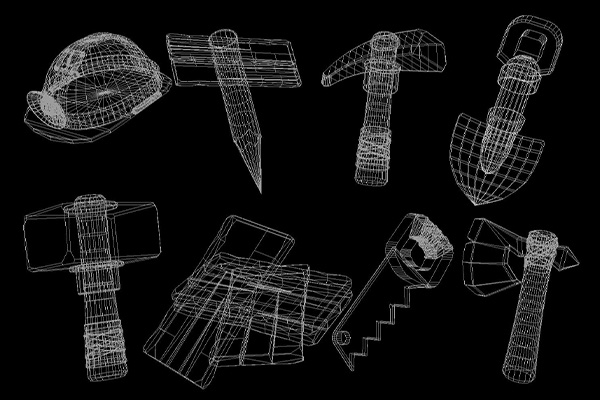
Pickaxes. Pointy end breaks rock, flat end digs. In tight spots where machines can't fit, it's still the go-to .

Hammers and chisels. For precision work—knocking off a piece of ore for sampling, shaping a hole, cleaning up a blast face .

Shovels. Moving loose rock, mucking out, cleaning up. Always needed .

Prybars and digging bars. When you need leverage to move something that doesn't want to move .

Why still use them? Because machines aren't always the answer. In small mines, exploration, tight spaces, or just for quick fixes, hand tools are portable, cheap, and work when everything else is shut down .


The Stuff That Keeps You Alive

Mining is dangerous. The tools that keep you breathing matter as much as the ones that dig.

Respirators and self-rescuers. When things go bad, you need clean air. Self-rescuers buy you time to get out .

Hard hats with lights. Obvious, but critical. Can't work what you can't see, and can't protect what's not covered .

Hearing protection. Drills and machines are loud. Permanent loud. Protect your ears .

Communications. Two-way radios, emergency phones. When you're underground, you need to reach someone .

Refuge chambers. If you can't get out, you need a place to wait. Oxygen, food, water—everything to survive until rescue .


Surface Mining Equipment—Big Iron in the Open

Blasthole drills. Before you blast, you need holes. These drill them, sometimes hundreds of feet deep .

Draglines. Massive machines with buckets bigger than houses. They drag the bucket across the surface to strip overburden in strip mines .

Bucket-wheel excavators. Continuous digging machines. They chew through material and dump it on conveyors without stopping .

Mining trucks. Giant dump trucks, some autonomous now. Haul ore and waste out of the pit .

Dozers and graders. Push dirt, maintain roads, clean up. The unsung heroes of any mine site .

Drones. Not just for cool videos. They survey, map stockpiles, inspect equipment, and keep people out of dangerous areas .


Underground Mining Equipment—Built for the Dark

Continuous miners. Used in coal and soft rock. Rotating drum with teeth scrapes material onto a conveyor. All done by remote control now .

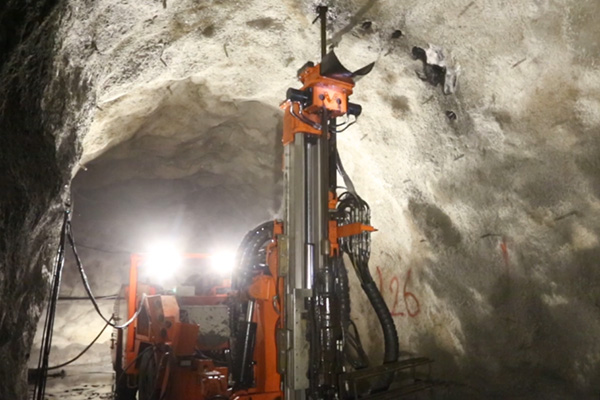
Jumbo drills. Mounted on booms, these drill holes for explosives in hard rock. Multiple drills on one rig speed up the work .

Loaders and haulers. Compact, maneuverable, built for tight spaces. Load broken rock and haul it to conveyors or shafts .

Roof bolters. Before you go anywhere, you secure the ceiling. Roof bolters drill holes and insert bolts to hold the rock together .

Shotcrete machines. Spray concrete on tunnel walls. Fast, effective support .

Rock dusters. Coal dust explodes. Rock dust prevents that. These machines spray inert dust to keep things safe .

Ventilation systems. You need air. Big fans, ducts, and tubes push fresh air in and pull bad air out .

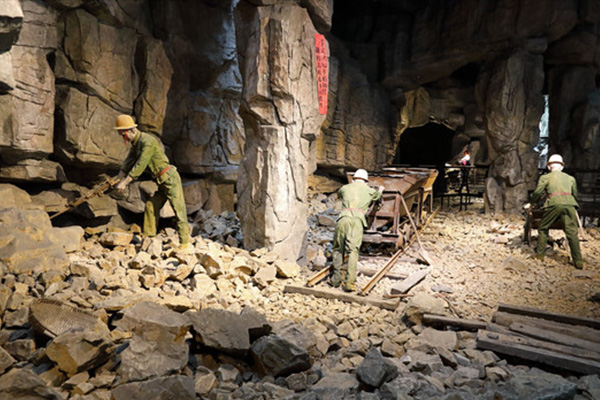
Underground rails. In some mines, trains still haul rock. Efficient, proven, and they keep working .


Summary

Here's the short version for when you're staring at a mine trying to figure out what you need:

  • Mining method determines tools. Surface, underground, placer, in-situ—each needs different gear.
  • Hard rock needs blasting. Soft rock can be cut.
  • Hand tools still matter. Pickaxes, shovels, hammers—they're not going away.
  • PPE keeps you alive. Respirators, lights, hearing protection—non-negotiable.
  • Surface equipment is big, mobile, and built for volume.
  • Underground equipment is compact, specialized, and often remote-controlled.

Mining tools range from a simple hammer to a million-dollar drilling rig. The right one for the job depends on the rock, the method, and what you're trying to get out. Match them right, and you're mining. Match them wrong, and you're just moving dirt.

Frequently Asked Questions

Q: What's the most common mining tool?

A: Depends on the mine. In coal, it's the continuous miner. In hard rock, it's the drill jumbo. But if you mean handheld, probably the shovel .

Q: Do miners still use pickaxes?

A: Yes. In small-scale mining, exploration, and tight spaces, pickaxes are still used every day .

Q: What's the difference between surface and underground mining equipment?

A: Surface equipment is bigger, faster, and designed for open spaces. Underground equipment is compact, often remote-controlled, and built to work in tight tunnels .

Q: How do drones help in mining?

A: They survey, map, inspect dangerous areas, and track stockpiles. Keeps people out of harm's way .

Q: What's the most dangerous part of mining?

A: Different mines have different dangers. Cave-ins, explosions, toxic gas, equipment accidents—all kill. That's why safety equipment is mandatory .

Q: Can the same machine work in both surface and underground mines?

A: Rarely. They're built for different environments. Some smaller loaders and trucks might work in both, but most equipment is purpose-built .

Buying Farm Equipment from China: What Nobody Tells You About Importing
Previous
Buying Farm Equipment from China: What Nobody Tells You About Importing
Read More
Buying a Roadheader: What Nobody Tells You Until You've Already Bought the Wrong One
Next
Buying a Roadheader: What Nobody Tells You Until You've Already Bought the Wrong One
Read More