WELCOME TO OUR BLOG

We're sharing knowledge in the areas which fascinate us the most
click

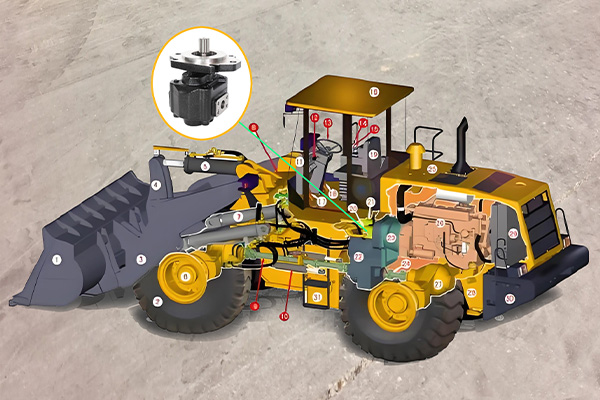
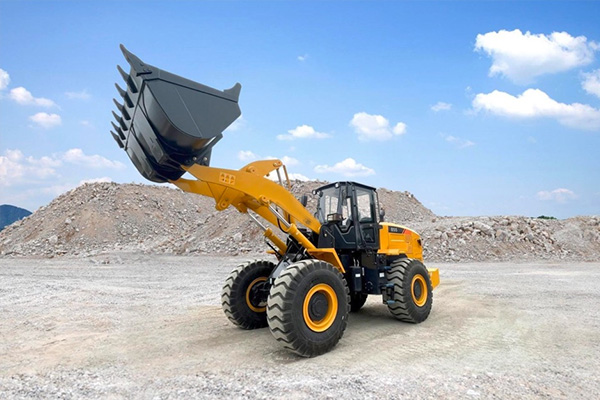
Loader Bucket Won't Lift? Here's When to Blame the Hydraulic Pump

By globalmachex March 2nd, 2026 60 views

The Real Story: Hydraulic Systems Don't Fail All at Once


Hydraulic systems usually give you warnings before they quit. Maybe the bucket has been moving slower lately. Maybe it jerks when you try to lift. Maybe you've noticed the hydraulic oil looks foamy when you check the sight glass. These are clues. The problem is, most operators are too busy to notice until something stops working entirely.

What Stops a Bucket From Lifting


Low Hydraulic Fluid

This is the easiest thing to check and is most often overlooked. If the fluid is low, the pump will not have enough oil to move to get the job done. The bucket will move slow, or it will not move at all. Look in the sight glass or use the dipstick with the loader on level ground and the bucket down. Topped it off and it still won’t lift? Keep digging.

Wrong Hydraulic Fluid

Not all hydraulic oil is the same. Using the wrong viscosity or the wrong type can mess with how the system performs. Thick oil in cold weather moves slow. Thin oil in hot weather loses its ability to transmit power. Check your manual. Use what the manufacturer says.

The Pump Isn't Actually Turning

This is ridiculous, but it can happen. If it is a belt or a coupler drive, the belt or the coupler can break. You can hear the engine roaring away, but the pump is not rotating fast enough, or it is not rotating at all. Look inside the pump. A broken belt or a broken coupler is much cheaper than a pump.

Suction Side Air Leaks

Hydraulic pumps do not like air. They like to move liquids, not bubbles. So, check the suction line for air. If the suction line contains air, the pump cavitates. Cavitation is a big word that means the pump is starving for oil and making weird noises. It might whine, or the buckets might move weirdly. Look for a suction hose that might be cracked, soft, or loose on the clamps. Some suction hoses contain a spring to stop the hose from collapsing. However, the spring might move around even though the hose looks okay.

Foaming Oil

If the tank is opened and it is noticed that there is foam, then it implies that there is air in the system. When there is air in the system, it comes from the suction hose, and it can be attributed to a loose hose, a faulty seal, or a pinhole on the hose. When the air is pumped into the oil, it causes the oil to foam. When it has been noticed that there is foam in the tank, it implies that there is no solid oil that is being pumped, and it is therefore impossible for there to be pressure.

Performance Changes With RPM

Also, observe how the bucket performs at varying speeds. If it performs better at higher speeds, then there may be a leak somewhere in the system. At higher speeds, more oil is pumped, and this may be enough to counteract a leak that is causing a problem at low speeds. If it performs better at low speeds, then there may be a relief valve opening too early or a pump that cannot cope with a surge in demand.

Jerky or Erratic Movement

When the bucket jerks or stutters during lifting, that's usually a flow issue. Something is interrupting the smooth delivery of oil. It could be a clogged filter, a partially blocked line, or air in the system. Sometimes it's a worn pump, but don't jump there first. Check the easy stuff.

How to Track Down the Real Problem


Step One: Check the Basics

Before you do anything else, check the level and condition of the fluid. Low fluid level? Time to add the good stuff! Fluid in poor condition? Perhaps it's time to change it! Check for leaks in all fittings, hoses, and seals. Look for a puddle under the machine!

Step Two: Listen

Start the machine and work the hydraulics. Do you hear whining, grinding, or knocking? Whining often means air. Grinding can mean metal-on-metal wear. Knocking might be cavitation. Write down what you hear and where it's coming from.

Step Three: Watch the Tank

While the machine is still operating, the cap of the hydraulic tank is opened (CAUTION: the liquid inside the tank is hot). The liquid that is going back into the tank is examined. If there are bubbles and foam inside the liquid, it means that there is air entering the liquid. If the liquid has a milky color, it means that there is water inside the liquid. This is a problem.

Step Four: Check Suction Lines

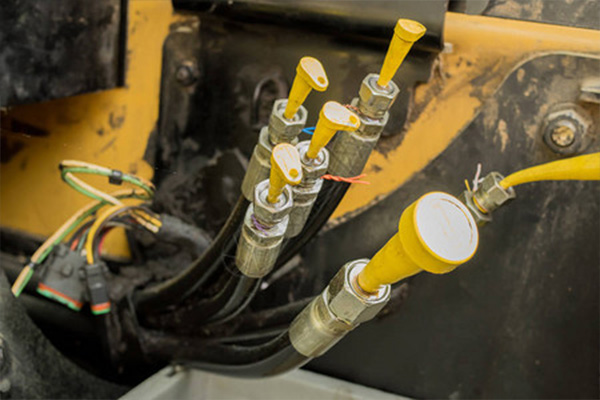
Check the suction hose between the tank and the pump. Squeeze the hose. If the hose is soft and squishy, it is possible the liner is deteriorating. Look for cracks around the clamps. Make sure all the connections are tight. A suction leak on the low pressure side is often the problem.

Step Five: Test at Different RPMs

Run the loader at idle and try to lift. Then bump up the RPM and try again. Note any difference. This helps narrow down whether the issue is flow-related or pressure-related.

Step Six: Check Filters

Clogged filters restrict flow. If your machine has a return filter or a suction strainer, check them. A filter that's packed with debris means something is wearing out inside the system. Change the filter and see if performance improves.

Step Seven: Pressure Test

If you have gotten this far without anything being obviously wrong, it is time to get a gauge on the system. Check the main relief valve setting to make sure it is within spec. Check the pressure at the pump outlet and the cylinders. Low pressure at the pump outlet means pump trouble. Low pressure at the cylinders, with good pressure at the pump, means there is a leak in the valves or lines to the valves.

What Actually Needs Fixing


Once you've done the digging, you'll have a better idea what's wrong. Here's what the clues usually mean:

Low fluid, dirty fluid, wrong fluid – Drain and refill with the correct oil. Check for leaks.

Broken belt or coupler – Replace the broken part. Check alignment.

Collapsed or damaged suction hose – Replace the hose. Don't patch it.

Loose fittings or worn seals – Tighten or replace. Air leaks need to be sealed.

Foaming oil – Find and fix the air leak. Let the oil sit so bubbles settle out.

Clogged filter – Replace it. Figure out why it clogged.

Weak performance at high RPM – Internal leak somewhere. Could be cylinder seals, valve spools, or pump wear.

Weak performance at low RPM – Could be a worn pump or a relief valve set too low.

Jerky movement – Air, contamination, or a worn pump. Start with the cheapest fixes.

If you've checked everything and the pump still seems suspect, here's how to be sure: install a pressure gauge right at the pump outlet. Run the machine at operating temperature. Deadhead the circuit (carefully—don't exceed rated pressure) and see what the gauge says. Compare to the spec in your manual. If pressure is low and you've ruled out everything else, the pump is probably the problem.

The Bottom Line


A loader bucket that won't go up is a real nuisance, but changing a hydraulic pump should be way down your list, not way up. Hydraulic pumps are very expensive, and they do not fail very often. More often than not, it is something simple, like fluid levels, a loose fitting, a worn hose, or a plugged filter. Take the time to go through it systematically. You might save yourself a whole lot of money and a whole lot of down time.

But what if it is the pump? At least you'll know for sure, and you won't have to worry at night wondering if you might have saved yourself a lot of grief with a $20 hose clamp.

Frequently Asked Questions

Q: How do I know for sure if my hydraulic pump is bad?

A: The only way to find out for sure is to perform a pressure test. Connect a gauge to the outlet of the pump and run the pump while checking the gauge against the specifications listed in the manual. If the pressure is low and other problems are ruled out, the pump is probably the culprit.

Q: Does low hydraulic fluid damage the pump?

A: Yes. Cavitation is created within the pump if the fluid level is low. Cavitation is the formation of bubbles within the pump. The bubbles collapse and damage the metal.

Q: Why does my bucket lift slower when the engine is at idle?

A:At idle, the pump moves less oil. If the bucket lifts slowly but smoothly, that's normal. If it's jerky or won't lift at all, you might have an internal leak that only shows up when flow is low.

Q: What does foamy hydraulic oil mean?

A: The word foamy indicates that air is entering the system. It is necessary to check the hoses to see if they are leaking. Air in the oil means the pump is working harder than usual.

Q: How often should I change hydraulic fluid and filters?

A: Change the fluid according to the manufacturer's recommendations. Typically, this involves a change after 1,000 to 2,000 hours of service, although severe service cycles may necessitate more frequent changes. The filters should be changed at least as frequently as the fluid is changed.

Q: Can a clogged filter make the bucket stop lifting?

A: Yes. A clogged filter restricts flow, which reduces pressure and can make the bucket sluggish or unresponsive. Check and replace filters as part of your troubleshooting.

Q:  Is it worth rebuilding a hydraulic pump, or should I just replace it?

A: It depends on the pump and the damage. Rebuilding is cheaper if the housing is good and only internal parts are worn. But if the pump has been run with contaminated fluid or has extensive damage, replacement is usually safer.

Forklift Batteries: How to Stop Killing Them and Make Them Last
Previous
Forklift Batteries: How to Stop Killing Them and Make Them Last
Read More
How to Stop Repeating Wheel Loader Screw-Ups
Next
How to Stop Repeating Wheel Loader Screw-Ups
Read More