

Overview
Selecting the best demolition excavator attachments for building demolition depends on the specific task, whether it is breaking reinforced concrete, processing steel, or sorting debris. For B2B fleet and procurement managers, optimizing for maximum payload, engine emissions, and attachment compatibility is crucial. This FAQ addresses the most critical pre-sales and post-sales questions to ensure your fleet operates efficiently and cost-effectively.
Frequently Asked Questions
Q1: What are the essential demolition excavator attachments for building demolition?
The most essential attachments are hydraulic breakers (hammers), concrete pulverizers, demolition grapples, and scrap shears. Hydraulic breakers are ideal for initially breaking up concrete and hard ground . Concrete pulverizers, like those from MB Crusher and Indeco, are then used to crush reinforced concrete and separate rebar for secondary processing . Grapples handle and sort debris, while shears cut steel beams and rebar into manageable pieces .
Q2: How do I determine the right excavator attachment for my machine's size?
Correct sizing is determined by matching the attachment to your excavator's operating weight, hydraulic flow (GPM), and pressure (PSI). Choosing the wrong size can lead to poor performance or carrier damage . For example, Indeco's IDC 11 is designed for 10-ton excavators, whereas the IDC 70 is for up to 120-ton machines . Always consult the manufacturer's specifications for the recommended excavator size class for any attachment .
Q3: What is the standard maintenance interval for a demolition excavator attachment?
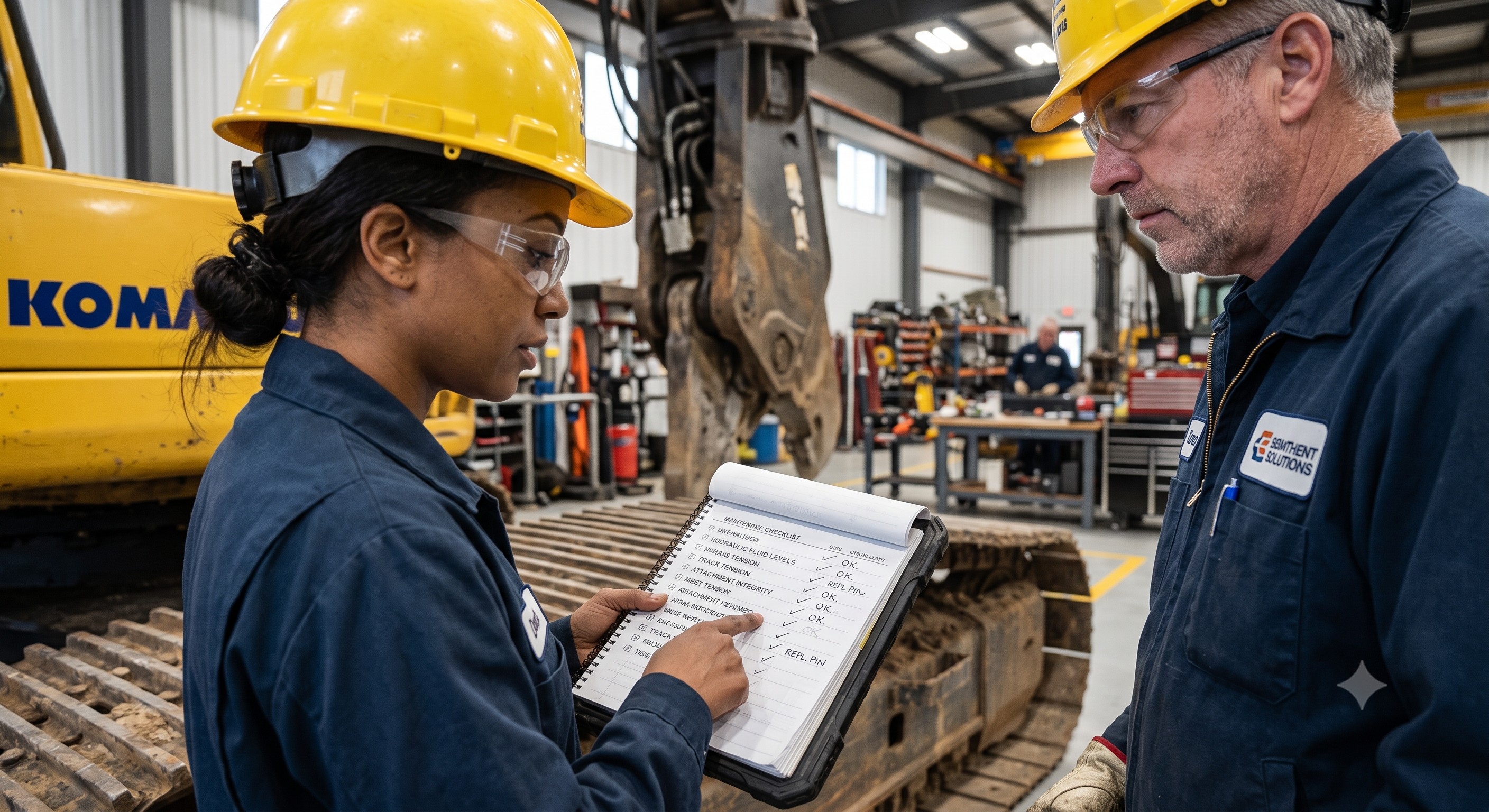
Performing routine checks every 8 hours of operation and major servicing every 250 to 1,000 hours is the standard best practice. Daily checks include greasing the tool mounting and arm system, and checking hydraulic fluid and lubricant levels . It is recommended to change hydraulic fluid and filters every 1,000 hours for optimal attachment performance .
Q4: How often should I change the hydraulic fluid in my demolition excavator?
For demolition excavators and their attachments, the hydraulic fluid should be changed at least once a year or every 1,000 operating hours. Some manufacturers recommend replacement at 1,000 to 1,500 hours or annually, whichever comes first . Always use the specified fluid type (e.g., viscosity class HLP 32 or higher) as recommended by the excavator manufacturer, and avoid mixing different brands of oil .
Q5: What are the key factors to consider for attachment compatibility?
Key factors are hydraulic flow, operating pressure, carrier weight, and mounting interface (e.g., pin-on or quick coupler). The attachment's required oil flow and pressure must align with the carrier's pump capacity; otherwise, performance will suffer . You must also consider boom geometry and the available auxiliary circuits to ensure proper operation and safety .
Q6: What post-sales support and spare parts availability should I expect?
You should expect clear maintenance guidelines, readily available spare parts, and support for wear items like teeth and bushings. Major manufacturers emphasize simplified maintenance with features like reversible and interchangeable teeth to reduce downtime . Service plans, such as Hitachi's ZX Secure, can provide routine maintenance at 500-hour intervals, while warranties like Volvo's Lifetime Frame warranty offer long-term peace of mind .