

Introduction: Solving the Productivity Paradox in Medium-Heavy Earthmoving
Construction and mining contractors face a persistent challenge: bridging the gap between compact excavators (0.5–1.5m³) that lack cycle efficiency and large mining shovels (4m³+) that demand excessive capital and logistics. The 2m³ bucket digger has emerged as the optimal solution for high-volume earthmoving, trenching for infrastructure projects, and quarry load-out operations. This class typically delivers an operating weight between 20–24 metric tons, net horsepower of 160–200 HP (119–149 kW), and hydraulic system pressures reaching 34.3 MPa (5,000 psi). This analysis evaluates powertrain architecture, structural durability, ISO/CE compliance, and a total cost of ownership (TCO) model backed by field data.
Core Powertrain & Structural Design
Engine & Emissions Compliance
The modern 2m³ bucket digger is powered by electronically controlled common-rail diesel engines meeting EPA Tier 4 Final / EU Stage V emissions standards. Typical displacement ranges from 4.5 to 6.8 liters, utilizing DOC+DPF+SCR after-treatment. At 1,900–2,000 RPM, the torque rise of 35–40% ensures consistent breakout force under load. Fuel consumption averages 16–21 L/hour in heavy digging cycles, equating to 0.12–0.16 L per cubic meter moved.
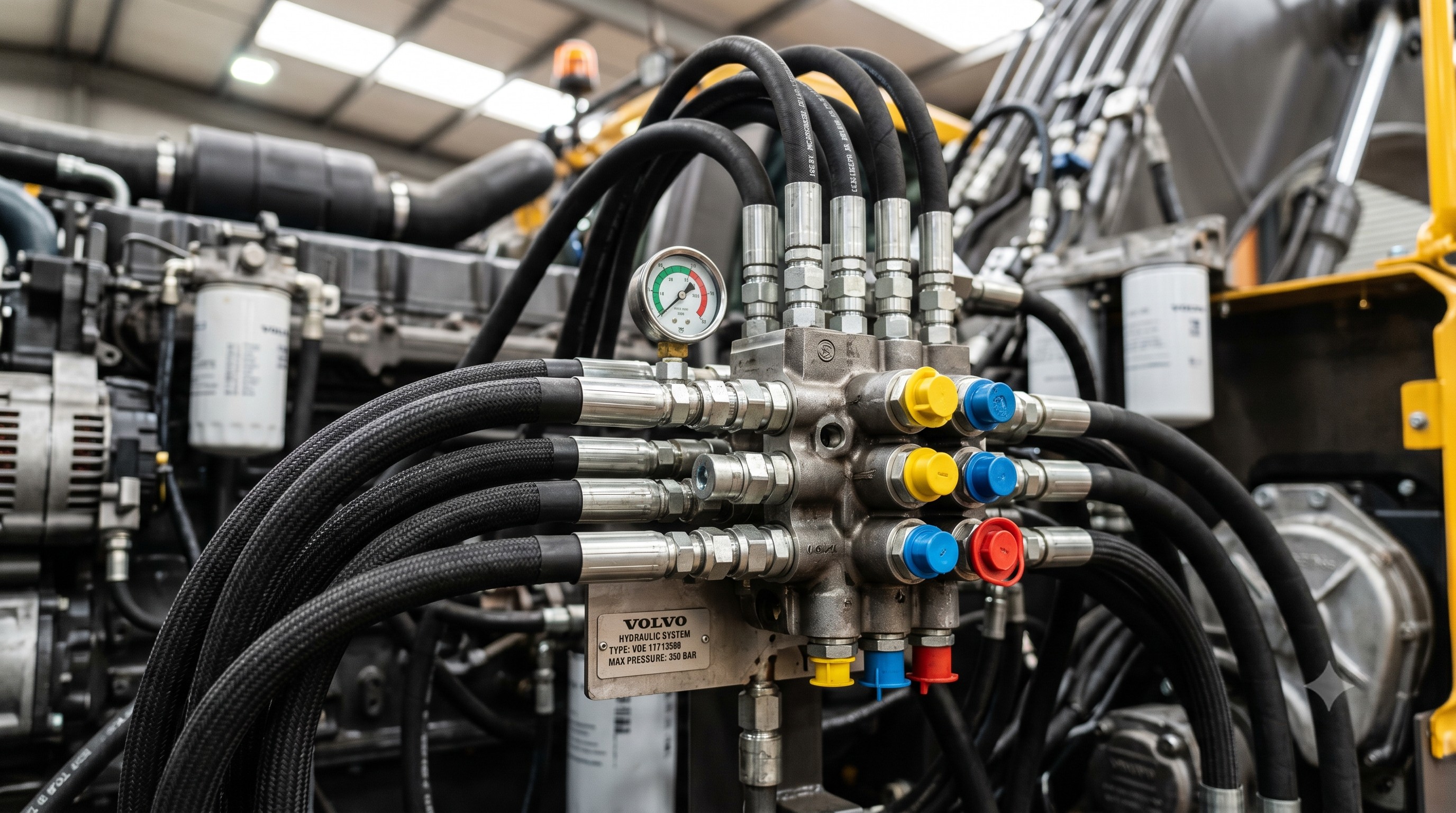
Hydraulic System Architecture
The system adopts a negative-flow control or load-sensing proportional hydraulics with three variable-displacement piston pumps. Combined oil flow reaches 2×200 L/min + pilot pump. Key metrics: bucket digging force ≥140 kN (31,500 lbf), arm digging force ≥110 kN (24,700 lbf). The system includes boom and arm holding valves (ISO 8643 compliant) and anti-cavitation circuits for deep excavation.
Undercarriage & Structure
The chassis is fabricated from high-tensile steel (yield strength ≥550 MPa) with box-section track frames. Track shoe widths vary from 600–800 mm, with triple semi-grouser or Z-grouser patterns. ROPS/FOPS certified cabs meet ISO 12117-2 and ISO 3449 Level II. Swing bearing diameter is typically 1.4–1.6 m with induction-hardened internal gears rated for 5,000+ hours of severe-duty cycles.
Technical Specifications
The table below consolidates benchmark parameters for a standard 2m³ bucket digger configured for heavy earthmoving (CE-certified, backhoe-monoboom type).
| Key Parameter | Technical Specification (2m³ Digger) |
|---|---|
| Engine Net Power | 160–200 HP (119–149 kW) @ 1,900 RPM |
| Operating Weight | 20,000–24,000 kg (44,000–53,000 lbs) |
| Bucket Capacity (SAE heaped) | 2.0 m³ (2.6 yd³) |
| Max. Digging Reach | 9.5–10.2 m (31.2–33.5 ft) |
| Max. Digging Depth | 6.2–7.0 m (20.3–23.0 ft) |
| Breakout Force (Bucket) | ≥140 kN (31,500 lbf) |
| Hydraulic Pressure (Main) | 34.3 MPa (5,000 psi) |
| Fuel Tank Capacity | 350–400 L (92–106 gal) |
| Swing Speed | 10–12 RPM |
| Emissions Standard | EPA Tier 4 Final / EU Stage V |
Comparative Advantage: TCO & ROI Analysis
Versus a smaller 1.5m³ machine, the 2m³ bucket digger reduces cycle count by 25–30% for a given volume, lowering operator fatigue and site logistics. In a 2,000-hour annual operation, fuel savings reach 12–18% per cubic meter due to optimized hydraulic match. Maintenance intervals: engine oil change at 500 hours, hydraulic oil filter at 1,000 hours. Undercarriage life averages 6,000–8,000 hours with proper track tension. TCO analysis: capital cost (35%), fuel (30%), maintenance (20%), tires/tracks (10%), others (5%). Break-even versus rental of larger 3m³ machines occurs within 18 months for projects requiring 300,000–500,000 m³ annual movement.
Heavy-Duty Application Scenarios
The 2m³ bucket digger excels in four primary domains:
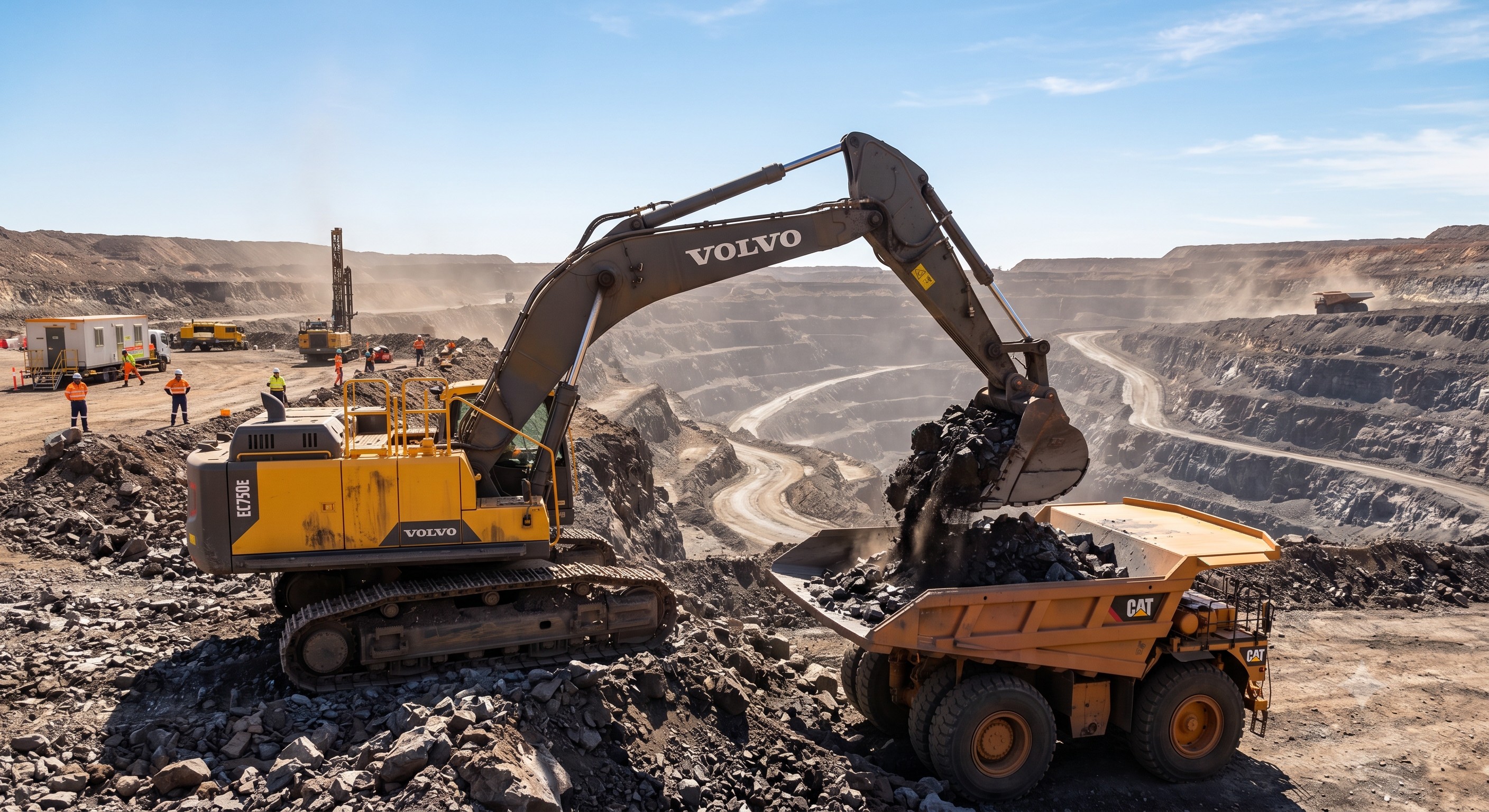
- Mining & Quarry Load-Out: Loading articulated dump trucks (ADTs) in 25–35 ton class; cycle times 22–26 seconds.
- Heavy Earthmoving (Dam/Highway Construction): Bulk excavation, riprap handling, and trenching for utilities.
- Industrial Material Handling: Loading hoppers with iron ore, coal, or aggregates at ports.
- Demolition & Recycling: When equipped with a reinforced bucket and hydraulic quick coupler.
Field data from a granite quarry shows 370–400 tons/hour productivity at 60% bucket fill factor, with availability exceeding 92% over 3,500 hours.
Conclusion: Engineering Productivity for the Next Decade
The 2m³ bucket digger represents the optimal balance of hydraulic power, structural integrity, and operational economy. With telematics integration (ISO 15143-3) and predictive maintenance analytics, fleet owners can achieve 15–20% lower lifecycle costs compared to earlier models. As emission regulations tighten and fuel prices fluctuate, investing in a modern 2m³ class digger with load-sensing hydraulics and ROPS/FOPS certified cab ensures compliance, safety, and profitability.