

Introduction: Solving Confined-Site Earthmoving Efficiency
Urban construction, indoor demolition, and narrow-trench utilities face a critical challenge: how to deliver sufficient breakout force and cycle speed when full-size excavators cannot fit. The 0.1m³ bucket digger class—typically operating between 1.5 to 2.5 metric tons—fills this gap with engineered density. Unlike skid-steer backhoes, these dedicated compact excavators achieve bucket breakout forces exceeding 15 kN while maintaining a tail swing radius under 800 mm. This blog provides a powertrain-level analysis, ISO/CE compliance data, and a TCO-based comparison to help fleet managers and contractors select the optimal unit.
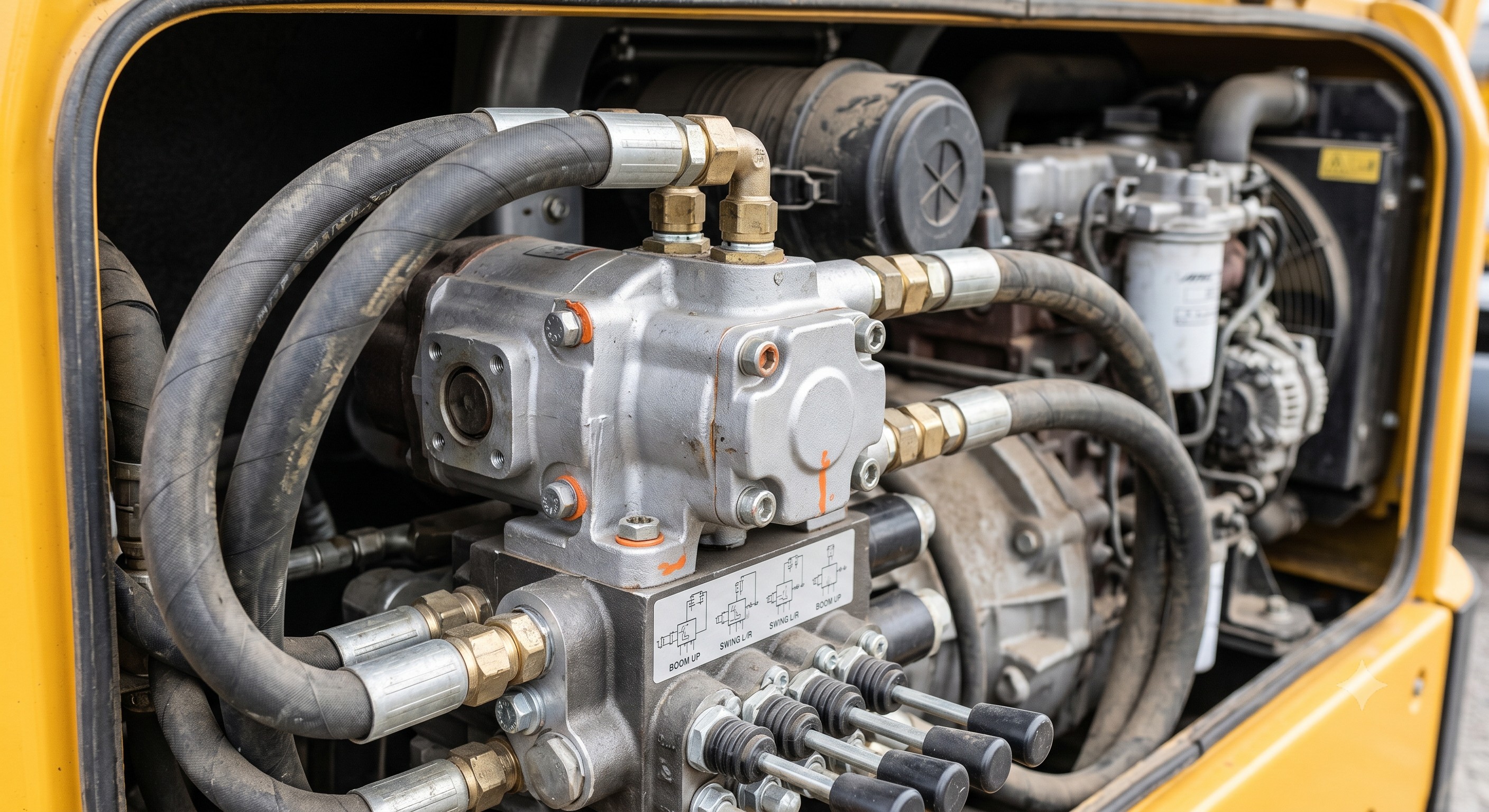
Core Powertrain & Structural Design
Engine & Emissions Compliance
Modern 0.1m³ bucket diggers deploy water-cooled, direct-injection diesel engines in the 13–18 kW (17.4–24.1 hp) range. For regulated markets, EPA Tier 4 Final or EU Stage V engines use DOC (Diesel Oxidation Catalyst) without DPF regeneration downtime. Typical displacement: 0.8–1.2 L. Fuel consumption under normal digging cycles: 2.1–2.8 L/h, delivering 8–10 hours of operation on a 22–28 L fuel tank.
Hydraulic System Architecture
The hydraulic system operates at 18–20 MPa (2610–2900 psi) main relief pressure. Dual-gear pumps provide total flow of 38–50 L/min, split between travel, swing, and attachment circuits. A pilot-operated joystick control (ISO pattern) enables proportional metering for precision trenching. Auxiliary hydraulic flow (standard on most models) reaches 25–35 L/min for hydraulic breakers or augers.
Undercarriage & Swing Structure
Rubber tracks (width 230–300 mm) with steel cord insert reduce ground pressure to 25–32 kPa, allowing operation on finished pavement. ROPS/FOPS-certified canopy or cab (ISO 12117) protects the operator. The upper frame uses high-tensile steel (490 MPa yield) with a swing bearing capable of 8–10 rpm rotation. Many designs incorporate a dozer blade (ground clearance 180–220 mm) for backfilling and machine stabilization.
Technical Specifications
The table below summarizes representative values for a new-generation 0.1m³ bucket digger. Actual values vary by OEM (Kubota, Yanmar, Bobcat, Takeuchi, or SANY). Always consult the machine’s COC (Certificate of Conformity).
| Key Parameter | Technical Specification (Typical Range) |
|---|---|
| Bucket Capacity (SAE heaped) | 0.10–0.12 m³ |
| Engine Power (Net) | 13–18 kW (17.4–24.1 hp) |
| Operating Weight (with cab) | 1,750–2,350 kg |
| Hydraulic Pump Flow | 38–50 L/min |
| Hydraulic Pressure (Main Relief) | 18–20 MPa (2610–2900 psi) |
| Bucket Breakout Force (ISO) | 15.0–18.5 kN |
| Arm Crowd Force | 9.5–12.0 kN |
| Fuel Consumption (avg cycle) | 2.1–2.8 L/h |
| Emissions Standard | EPA Tier 4 Final / EU Stage V |
| Ground Pressure (rubber tracks) | 25–32 kPa |
| Tail Swing Radius (zero-tail models) | ≤ 750 mm |
| Max Dig Depth | 2,200–2,500 mm |
Comparative Advantage: TCO, Fuel Efficiency & ROI Analysis
Compared to a 0.2m³ compact excavator or a mini wheel loader with backhoe, the 0.1m³ bucket digger delivers lower total cost of ownership (TCO) in confined applications over 3,000 operational hours:
- Fuel savings: 0.1m³ class consumes 2.5 L/h vs 4.0 L/h for 0.2m³ class – saving $2,250 (at $1.50/L) over 3,000 hours.
- Transport & rental logistics: 1.8 t operating weight fits on a single-axle trailer (no CDL in many regions), reducing mobilization costs by 40%.
- Maintenance: Fewer wear parts (track idlers, pins, bushings) due to lower inertia loading. Oil change intervals: 500 hours for engine, 1,000 hours for hydraulic.
- ROI timeline: At typical rental revenue of $120–$160 per day (or $1,800–$2,400/month), payback occurs within 18–24 months for units priced $25,000–$35,000 new.
Heavy-Duty Application Scenarios
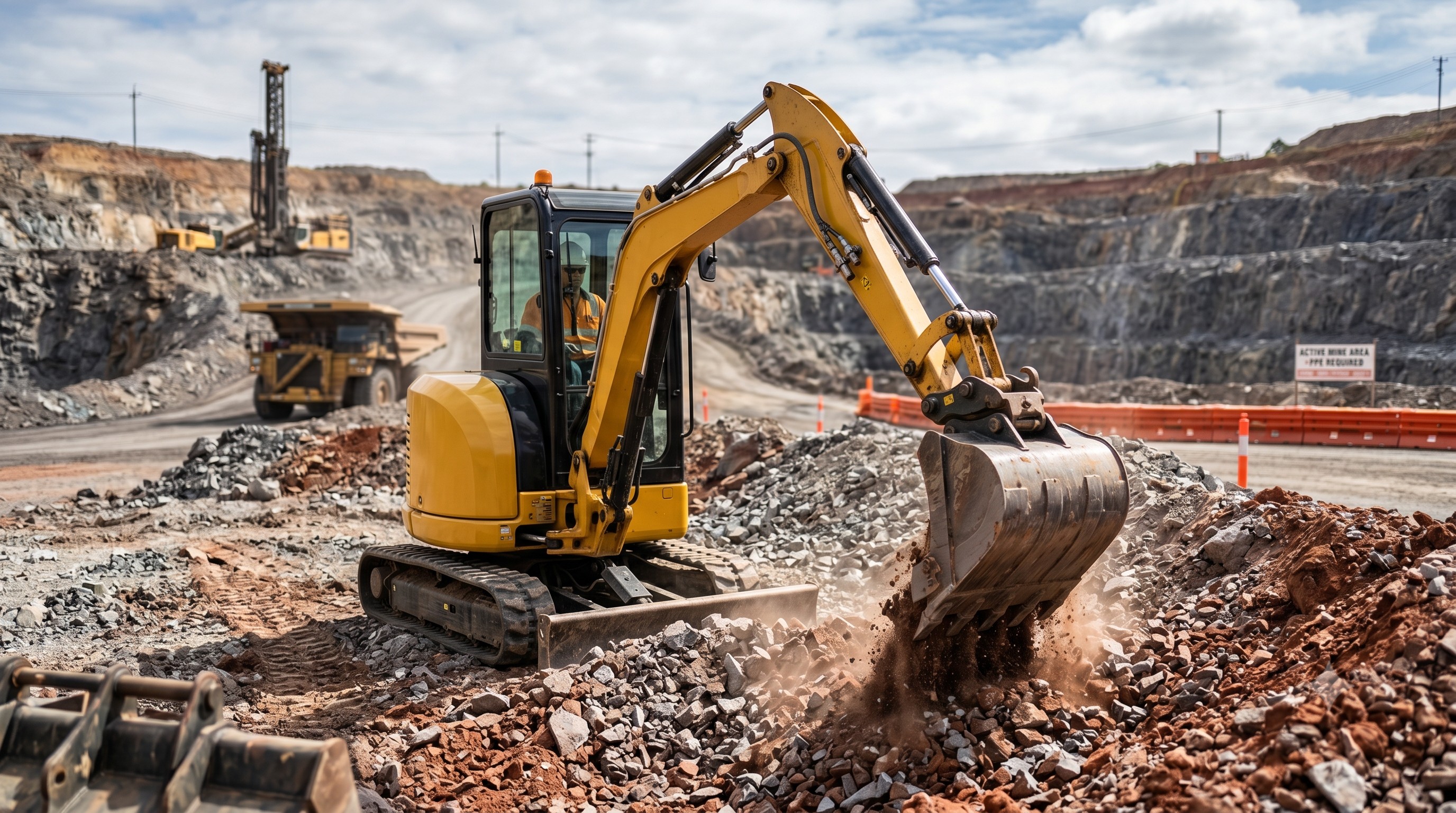
- Urban utility trenching: 0.1m³ bucket digs 200–300 mm wide trenches for water/gas lines beside active roads. Zero tail swing models protect adjacent traffic.
- Indoor demolition & low-headroom sites: Foldable ROPS and height under 2.3 m allow passage through standard doorways. Hydraulic breaker (200–300 J impact class) removes concrete slabs.
- Agricultural earthmoving: Cleaning drainage ditches or digging fence post holes with auger attachment. Low ground pressure prevents pasture damage.
- Manufacturing yard maintenance: Moving bulk materials (gravel, scrap) in confined dock areas. The dozer blade backfills rail spurs.
- Hardscaping & swimming pools: Precision excavation around existing foundations without over-dig, reducing concrete waste by up to 15%.
Conclusion: Maximizing Industrial Productivity with the Right Bucket Size
The 0.1m³ bucket digger is not merely a smaller machine—it is a high-specific-power tool optimized for constricted environments where every millimeter and kilowatt matters. By matching hydraulic flow (40+ L/min), breakout force (15+ kN), and emissions compliance (Tier 4 / Stage V) to your typical cycle, you cut fuel costs, lower transport overhead, and achieve faster ROI. For applications where a 0.2m³ bucket would require two passes or manual finishing, the 0.1m³ class delivers a single-pass, high-precision solution. Evaluate the hydraulic auxiliary capability and undercarriage build quality—these define long-term reliability.