

Introduction: The Urban Construction Dilemma
Modern municipal engineering faces a paradox: projects must be executed with surgical precision in densely populated areas while demanding the brute force of heavy earthmoving. Traditional tracked excavators, while powerful, damage finished pavements, require costly lowboy trailers for transport between job sites, and struggle with the agility needed for roadside maintenance. This is where the wheel excavator emerges as the definitive solution. As urbanization intensifies, particularly in dense North American and European corridors, the demand for machines that offer 'digging power, diverse attachment capability, and the manoeuvrability to navigate densifying urban centres' is skyrocketing . The wheel excavator is not merely an alternative; it is a strategic asset for municipalities aiming to balance Total Cost of Ownership (TCO) with operational efficiency.
Core Powertrain & Structural Design
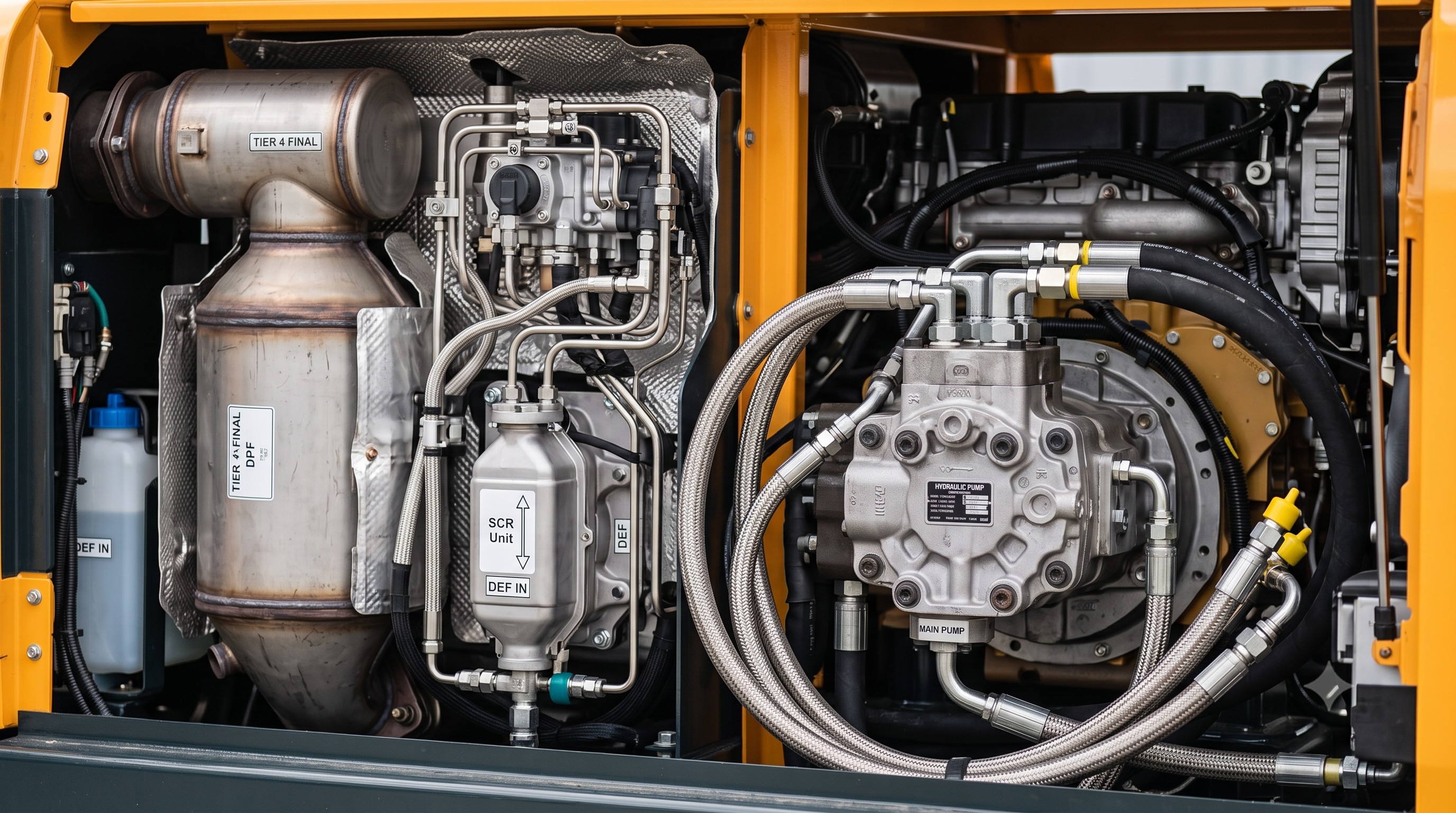
The engineering philosophy behind a municipal-grade wheel excavator prioritizes a symbiotic relationship between mobility and hydraulic power. At the heart of these machines lies a high-torque diesel engine, often compliant with stringent EPA Tier 4 Final or EU Stage V emissions standards . For instance, the Cat C4.4 engine, found in models like the M316 and M320, delivers net power ranging from 141 to 148 hp while incorporating advanced aftertreatment systems to reduce NOx and particulate matter . The structural integrity of the chassis is reinforced to handle the torsional stresses of high-speed road travel (often up to 35 km/h or 21.7 mph) and heavy digging simultaneously .
Hydraulic system design is critical. Closed-loop, load-sensing hydraulic systems provide smooth, proportional control, ensuring that the machine's power is precisely allocated to the task at hand, whether it is operating a mulcher or performing fine grading . For example, the TB395W features a primary auxiliary circuit delivering 32 gpm, ensuring ample power for hydraulic attachments . Furthermore, the integration of robust outriggers and dozer blades, which are essential for stability during heavy lifts, distinguishes wheeled excavators from smaller compact machines .
Technical Specifications: The Numbers That Matter
For procurement specialists and fleet managers, data dictates decisions. The following parameters provide a comparative snapshot of leading wheel excavator models designed for municipal rigor:
| Key Parameter | Technical Specification (Example Range) |
|---|---|
| Engine Horsepower (Net) | 100 - 160 hp (75 - 120 kW) |
| Operating Weight | 10 - 20 Tonnes (22,000 - 44,000 lbs) |
| Max Travel Speed | 18 - 22 mph (30 - 35 km/h) |
| Emissions Standard | EPA Tier 4 Final / EU Stage V |
| Hydraulic Circuit Pressure | 35,000 kPa (5,076 psi) |
| Max Digging Depth | 13 - 19 ft (4 - 5.8 m) |
Performance & Mobility Benchmarks
- Engine Power: Ranges from 85 kW (114 HP) in compact models to 115 kW (154 HP) in larger units, providing the necessary horsepower for heavy-duty earthmoving .
- Operating Weight: Typically falls between 12,100 kg and 18,400 kg, balancing the need for stability during lifting with the requirement to protect urban infrastructure .
- Hydraulic Flow & Pressure: Main hydraulic pumps often exceed 275 L/min at pressures up to 35,000 kPa, enabling high cycle times and powerful breakout forces .
- Emission Standards: Compliance with ISO 9249 and adherence to Tier 4 Final or Stage V regulations is standard, ensuring sustainability in urban environments .
- Safety: ROPS/FOPS (Rollover/Falling Object Protective Structure) certified cabs are mandatory for operator safety in high-risk municipal zones .
Comparative Advantage: Total Cost of Ownership (TCO) and ROI
The primary competitive edge of the wheel excavator lies in its lifecycle economics. While the initial capital expenditure may be comparable to a tracked unit, the operational savings are substantial.
- Mobility & Transport Savings: A wheel excavator's ability to self-propel between job sites at speeds over 30 km/h eliminates the need for transport trailers, reducing mobilization time and costs significantly . This is particularly beneficial for municipalities managing multiple, smaller repair sites.
- Infrastructure Protection: Rubber tires exert minimal ground pressure compared to steel tracks, which prevents damage to asphalt and concrete surfaces. This removes the cost of road repair or resurfacing after utility work .
- Versatility & Attachment ROI: Quick couplers and multiple auxiliary hydraulic circuits allow a single wheel excavator to serve as a trencher, mower, grapple, or breaker. This reduces the need for a diversified fleet .
- Fuel Efficiency: Advanced powertrain management, such as Smart Power Control (SPC) and Auto Engine Speed Control, can reduce fuel consumption during idle and light-load cycles by over 15% .
Heavy-Duty Application Scenarios
The wheel excavator is the Swiss Army knife of the job site. Its application range extends from fine landscaping to heavy infrastructure maintenance .
Municipal Infrastructure & Road Maintenance
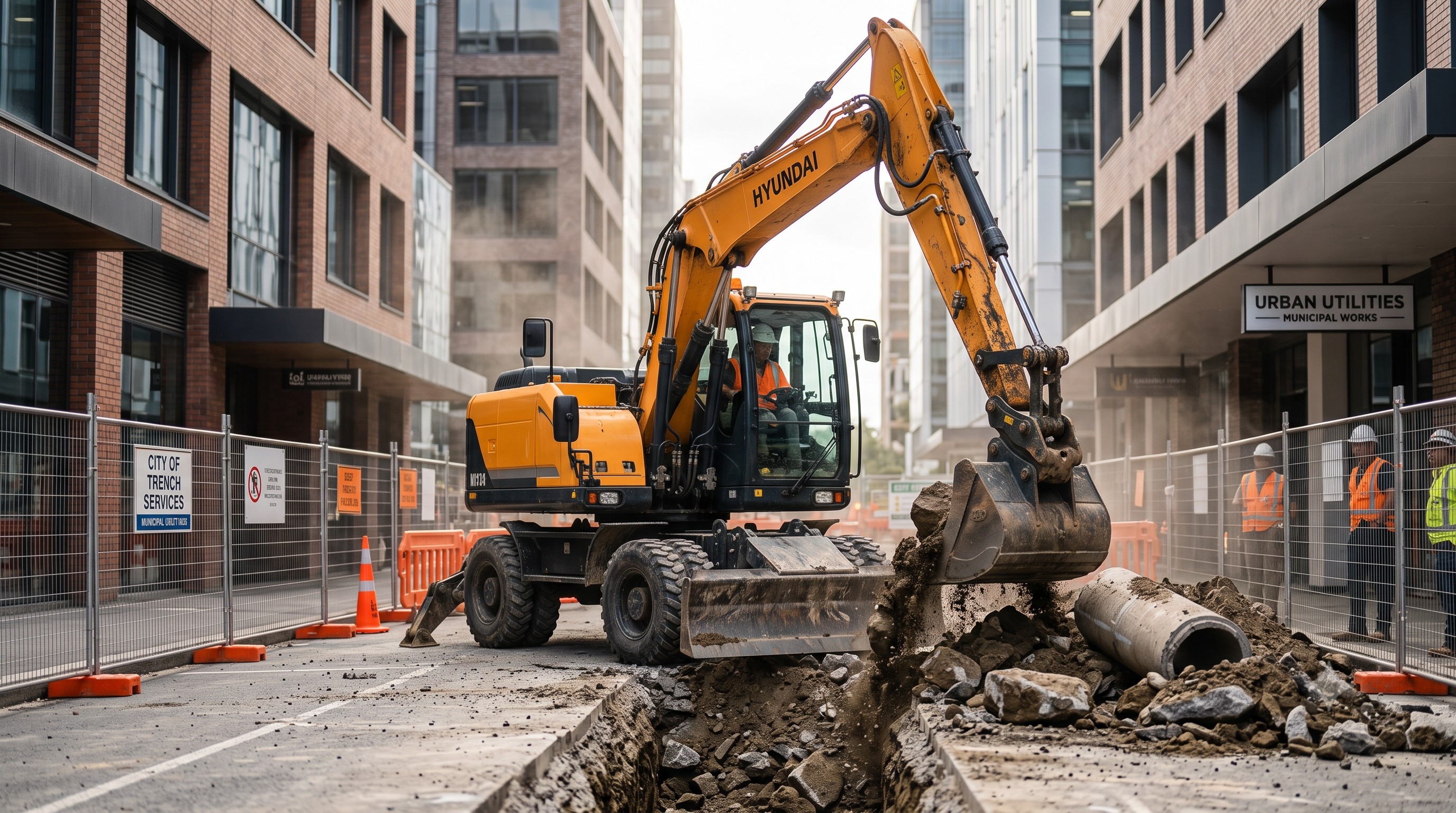
For highway and bridge construction, the two-piece articulating boom allows operators to work under obstacles, clear ditches, and lift materials with precision without shutting down adjacent traffic lanes . In street development, these excavators are replacing traditional backhoes for utility trenching and repairs due to their extended reach and superior truck-loading capabilities .
Site Development and Material Handling
Wheeled excavators excel at site development and land improvement tasks. The inclusion of a dozer blade allows a single operator to trench, backfill, and grade without bringing in separate bulldozers . In waste management and recycling facilities, these machines are increasingly used with grapple attachments or magnets to handle dense materials efficiently, a trend underscored by their presence at specialized expos .
Precision Earthmoving & Landscaping
In landscaping and grading, the low ground pressure minimizes damage to finished green areas. When paired with augers, they facilitate rapid planting and fence installation, while the hydraulic system ensures gentle control over delicate materials .
Conclusion: Engineering the Future of Municipal Productivity
The wheel excavator has transcended its role as a niche machine to become a cornerstone of modern urban infrastructure management. Its ability to deliver the digging force of a tracked excavator while preserving on-road mobility and reducing surface damage makes it indispensable for the complex, multi-faceted projects typical of municipal engineering . As emissions standards tighten and urbanization accelerates, the data-driven advantages in TCO, versatility, and safety position the wheeled excavator as the optimal investment for contractors and municipalities aiming to maximize productivity while minimizing operational friction.