

Overview
Sourcing a mini excavator supplier is a strategic decision that impacts your operational costs and project timelines for years to come. Whether you are a procurement manager evaluating options or a fleet manager planning for long-term maintenance, understanding the nuances of supplier evaluation, machine specifications, and service intervals is critical. This FAQ guide provides expert answers to the most common high-intent questions, from pre-sales technical queries to post-sales support.
Frequently Asked Questions
Q1: What are the key factors to consider when evaluating a mini excavator supplier?
The most important factors are compliance certification, production capability, and after-sales responsiveness. A reliable supplier should provide verifiable proof of international standards like ISO 9001 and EPA/CE compliance, which are essential for customs clearance and regulatory adherence . Additionally, look for suppliers with high on-time delivery rates (ideally above 97%) and strong reorder rates, as these are strong indicators of customer satisfaction and operational discipline .
Q2: What is the standard operating capacity and typical weight range for a mini excavator?
Standard mini excavators are generally defined as machines weighing under 10 tons (often between 1 to 6 tons), with the most common B2B procurement models operating in the 1.8 to 3.5-ton range for urban and landscaping projects . The payload or bucket capacity varies by model, but a key metric to review is the machine's breakout force; for example, a 10-ton class machine can achieve a digging force of over 17,000 lbs, while smaller units offer proportionally less force .
Q3: Which engine emission standards should I prioritize for my region?
For North American buyers, a U.S. EPA Tier 4 Final-compliant engine is non-negotiable for import and legal operation . European markets typically require EU Stage V compliance, while other regions may accept different standards; however, always verify the supplier can provide documentation matching your local regulations .
Q4: How important is attachment compatibility and what options are available?
Attachment compatibility is crucial for maximizing the ROI of your machine, as it allows a single unit to perform multiple tasks. Most leading suppliers offer options for quick couplers, hydraulic thumbs, tilting buckets, grapples, and augers . Verify the machine has the required auxiliary hydraulic circuits and flow rates; a machine like the Cat 309 CR VAB provides primary and secondary auxiliary circuits to support these tools .
Q5: What is the recommended maintenance interval and what does it involve?
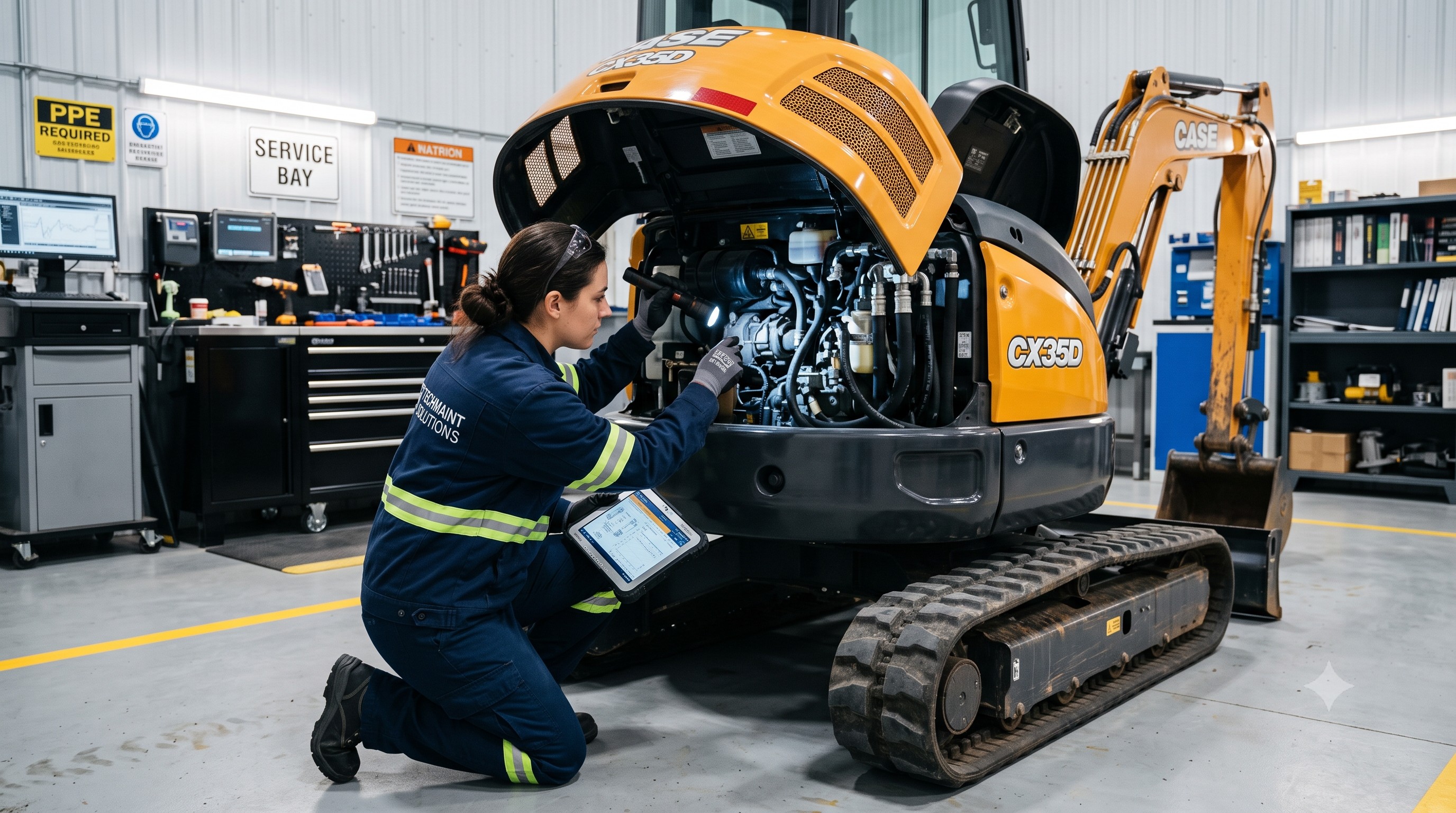
The standard maintenance interval is generally based on engine hours, with a 250-hour or 500-hour service schedule being most common for fluid and filter changes. However, for critical components, it is recommended to perform daily pre-start visual inspections and strictly adhere to the OEM's service manual for checks on the hydraulic system, track tension, and pivot pins .
Q6: How often should the hydraulic fluid be replaced in a mini excavator?
Hydraulic fluid replacement is typically recommended every 1,000 to 2,000 hours of operation, depending on the machine's workload and operating environment. It is essential to monitor fluid quality and use the manufacturer's specified hydraulic oil (e.g., HYDO Advanced Hydraulic Oil for Cat machines) to ensure component longevity and prevent system contamination .
Q7: What is the typical warranty offered by Chinese suppliers versus premium brands?
Chinese manufacturers generally offer a standard 12-month warranty covering major components like the engine and pump . In contrast, premium OEMs like Kobelco and JCB offer significantly longer coverage, such as a 4-year/4,000-hour full machine warranty or a 3-year/2,000-hour warranty with a service package .
Q8: What are the best practices for sourcing spare parts for a mixed fleet?
It is essential to maintain separate inventory logs for mini excavator parts and standard machine components to avoid costly errors. While mini excavator parts are often less expensive and easier to source due to their widespread use, you must verify OEM specifications for brand-specific components (like Hitachi or Cat parts) to ensure compatibility .