

Introduction
In the dense, intricate maze of modern municipal engineering, the call for compact, agile equipment has never been louder. Micro excavators, typically defined as machines weighing under 1.5 tons, are often heralded as the ultimate solution for urban utility work and landscaping projects . Their ability to slip through narrow gates and operate with minimal ground disturbance makes them appear as the default choice for sidewalk repairs and infrastructure maintenance. However, while these miniature machines excel in access, a critical question remains for project managers and lead engineers: what are the fundamental limitations that can render a micro excavator ineffective or inefficient in municipal engineering? This guide provides a no-nonsense, data-driven analysis of the physical and mechanical constraints of micro excavators, moving beyond the marketing hype to deliver objective insights for optimal fleet selection.
Core Powertrain & Structural Design Limitations
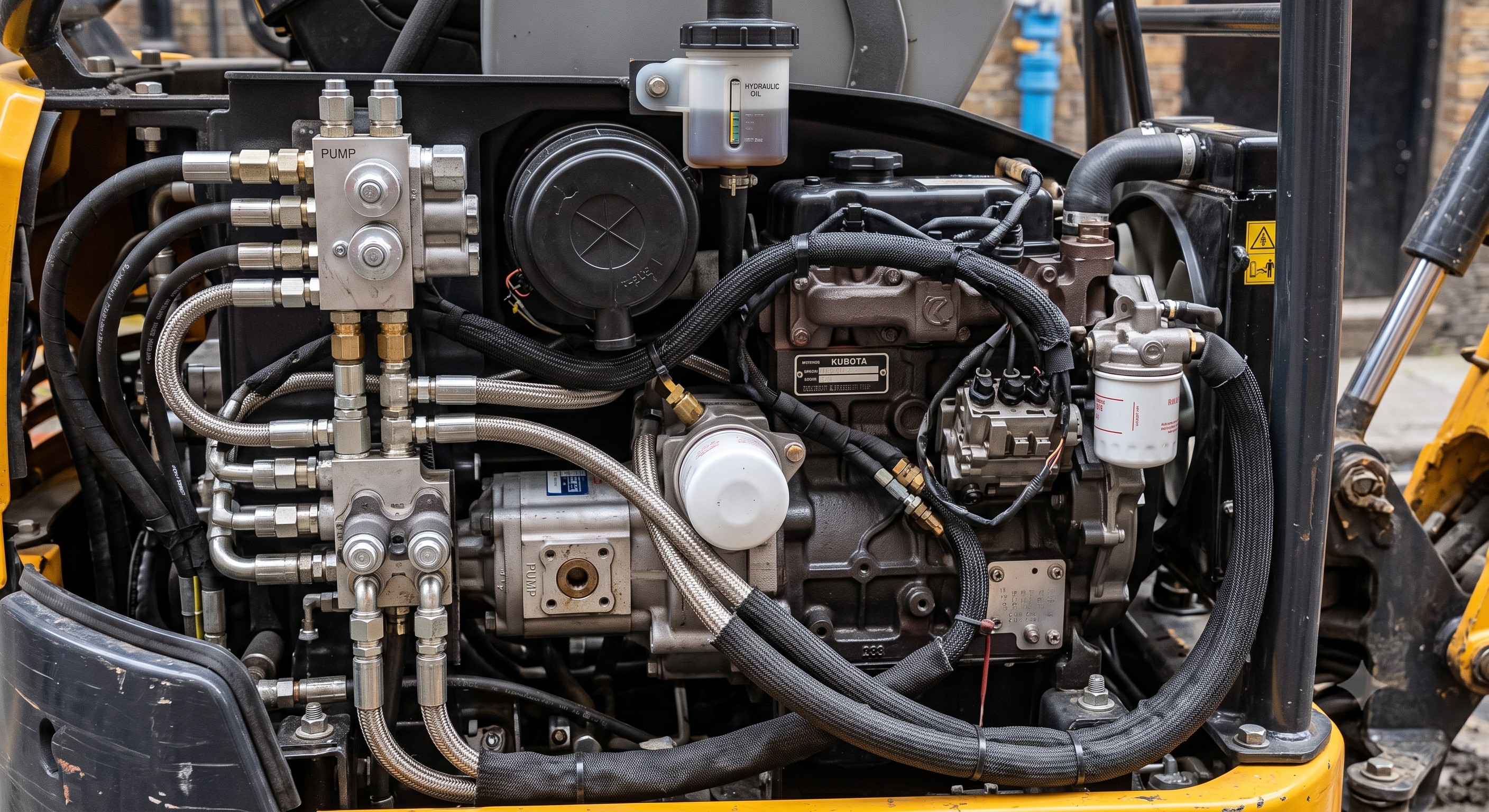
At the heart of a micro excavator's operational capability is its powertrain and hydraulic system. While manufacturers have pushed engineering boundaries to maximize performance in a small package, inherent physical constraints remain. The most immediate limitation is raw engine horsepower and hydraulic flow. For instance, a typical 1.0 to 1.7-tonne micro excavator offers engine power in the range of 8 to 19 kW (approximately 11-25 HP) . This finite power output directly translates to a reduced hydraulic flow rate, often between 20 to 25 liters per minute (L/min) . This significantly impacts the machine's ability to run high-demand attachments like large hydraulic breakers or powerful trenchers efficiently. While suitable for light digging, the limited hydraulic output means slower cycle times and reduced breakout force, which is a critical metric when breaking into hard, compacted urban soils.
Structurally, the chassis and undercarriage of a micro excavator are designed for lightweight and transportability. This means a lower operating weight—typically between 1,000 kg and 1,700 kg—which limits the machine's stability and lifting capacity . The maximum lift capacity at ground level over the side is generally well under 300-400 kg, which is insufficient for handling heavy pipe sections or large quantities of material . This lack of mass and a narrower track gauge mean that even on a slight slope, the risk of instability or tipping is significantly higher compared to a 3-ton compact excavator. Municipal projects often require working near trenches or on uneven terrain, making the micro excavator's lower stability a distinct safety and operational limitation.
Technical Specifications: A Comparative Baseline
To contextualize these limitations, the table below provides an overview of typical specifications for a 1-tonne class micro excavator, compared against a larger 3-tonne compact excavator for contrast. This data underscores the compromises inherent to ultra-compact machinery.
| Key Parameter | Micro Excavator (1-1.5t) | Compact Excavator (3t) for Contrast |
|---|---|---|
| Engine Power | ~8-19 kW (11-25 HP) | ~20-30 kW |
| Operating Weight | ~1,100 - 1,700 kg | ~3,000 kg |
| Max Dig Depth | ~2.0 - 2.5 m | ~3.0 m+ |
| Max Lifting Capacity | ~300 - 400 kg | ~1,200 kg |
| Hydraulic Flow | ~20-25 L/min | ~45-50 L/min |
| Typical Application | Shallow trenching, landscaping | Deep utilities, foundation work |
Operational Limitations in Depth and Reach
Perhaps the most significant and frequently encountered limitations in municipal engineering relate to the working envelope of the micro excavator. The compact dimensions that make it maneuverable also drastically restrict its maximum digging depth and reach. A standard 1.0 to 1.7-tonne micro excavator typically features a maximum digging depth of around 2.0 to 2.5 meters (6.5 to 8.2 feet), with a reach of approximately 3.8 to 4.0 meters .
These figures are adequate for digging shallow utility trenches for fiber optics or minor landscaping but become a severe bottleneck for deeper municipal applications, such as installing or repairing municipal water mains or sewer lines, which often require depths well beyond 3 meters . A micro excavator simply lacks the boom and arm length to execute these tasks. In a situation where a deeper trench is necessary, the machine would be required to stand on the edge of a precarious slope, further compounding the stability issues mentioned earlier. This directly impacts project efficiency and safety, often forcing engineers to use larger, less-convenient machines for tasks that seem superficially suited to a micro excavator.
Productivity, Attachments, and Environmental Limits
When it comes to large-scale municipal projects, the productivity of a micro excavator is a primary limiting factor. The smaller bucket size, typically ranging from 200mm to 600mm in width, and slower cycle times mean that the daily trench output is significantly lower than that of larger equipment . For example, a 1-tonne digger might complete 20-25 meters of trench per day, while a 3-tonne machine could double that output, a critical consideration for meeting tight municipal project timelines and minimizing road closure disruptions .
Furthermore, the attachment compatibility is restricted. While a micro excavator can support a limited range of tools, it cannot run heavy-duty attachments such as large hydraulic breakers or compaction wheels due to insufficient hydraulic flow and carrier weight . They also face limitations in ground pressure and traction; their low weight is an advantage on finished surfaces but can be a liability in muddy or loose soil conditions where they may lose traction and become bogged down, reducing overall efficiency .
Conclusion: Evaluating the Strategic Trade-off
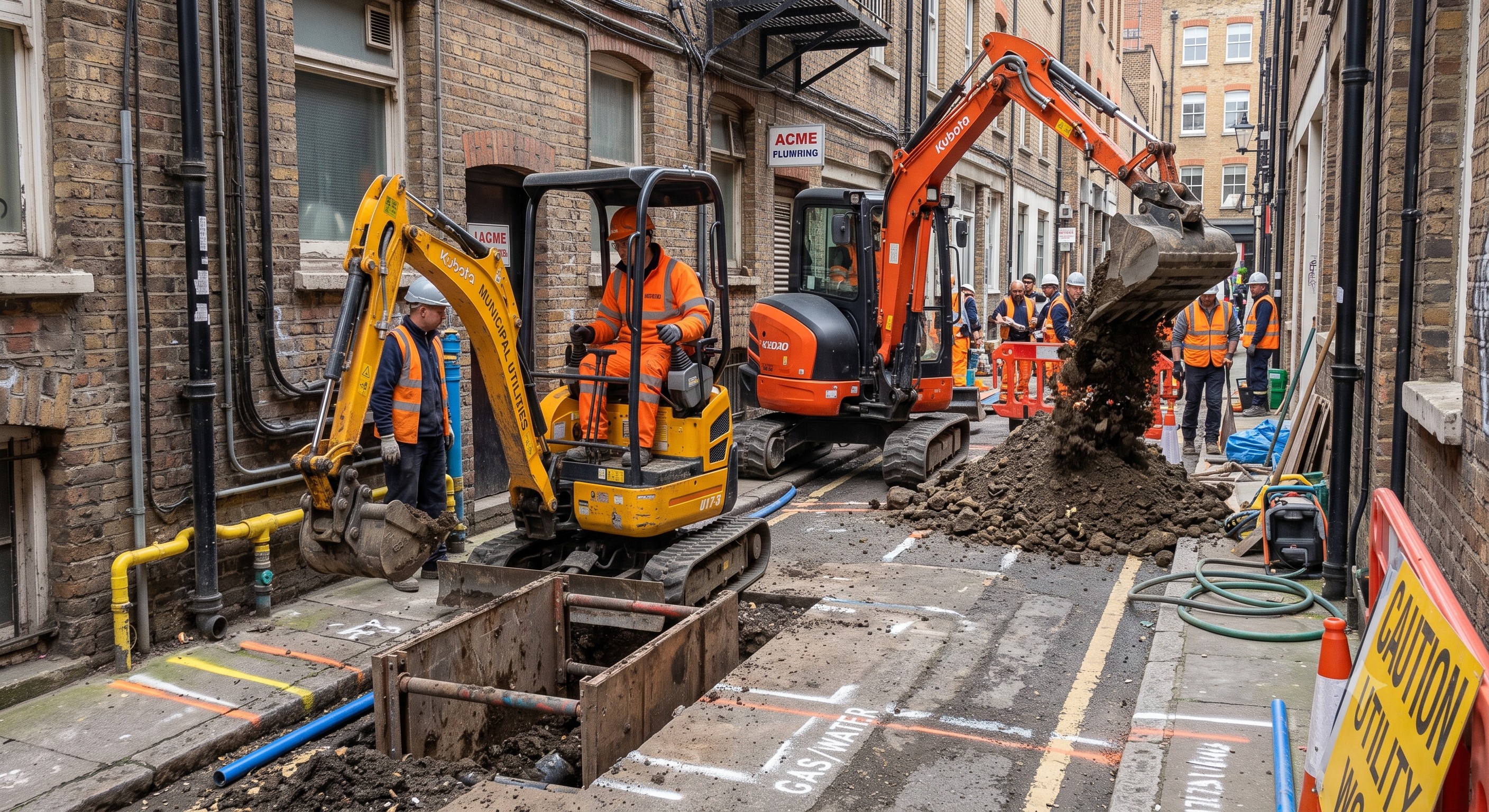
In conclusion, the micro excavator is a highly specialized tool with distinct limitations that must be acknowledged by municipal engineering professionals. Its constraints in digging depth (under 2.5m), lifting capacity (under 400kg), hydraulic power, and overall productivity prevent it from being a one-size-fits-all solution . While it is an irreplaceable asset for small-scale, access-restricted jobs and light utility work, its use on major infrastructure projects is highly impractical and inefficient. Making the right decision hinges on a thorough assessment of the project's requirements—balancing the machine's superior access and low ground disturbance against its fundamental lack of power, depth, and reach. For the modern municipal engineer, understanding these mechanical and operational constraints is not just about equipment selection; it is about ensuring project viability, safety, and cost-effectiveness.