

Introduction: The Modern Agricultural Challenge
Today's agricultural operations face a dual challenge: maximizing productivity while minimizing operational costs. From feedlot management to large-scale crop harvesting, the demand for versatile, high-mobility equipment is greater than ever. The wheel excavator has emerged as a compelling solution, but a critical question persists: Can a wheel excavator handle rough terrain in agriculture effectively? This blog provides an authoritative, data-driven analysis of wheel excavator performance in demanding agricultural environments, examining powertrain durability, soil impact, and overall return on investment (ROI) compared to traditional alternatives like crawler excavators.
Core Powertrain & Structural Design for Agricultural Durability
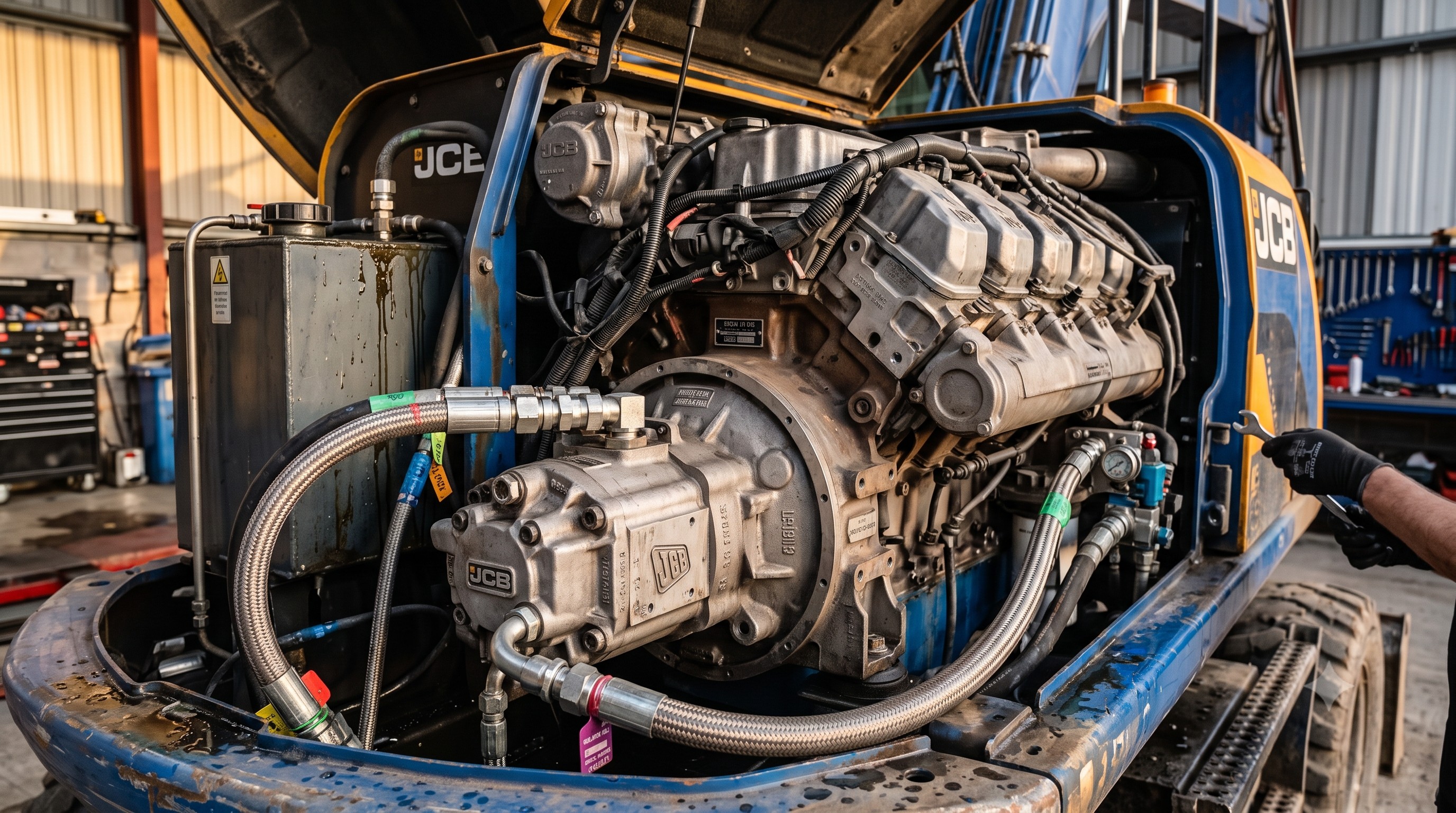
For a wheel excavator to be viable in agriculture, its powertrain and chassis must withstand the rigors of uneven fields, heavy loads, and continuous operation. Modern wheel excavators are engineered with robust systems to meet these demands.
Engine & Emissions Compliance
Agricultural applications often require long working hours and significant power. Leading manufacturers equip their wheel excavators with high-performance engines that comply with stringent emission standards. For instance, the Cat M315 is powered by a Cat C4.4 engine delivering 148 hp (110 kW) and meets U.S. EPA Tier 4 Final and EU Stage V emission standards, ensuring both power and environmental compliance on modern farms . Similarly, the Hyundai R210W-9A, used in a real-world sugar beet harvesting case study, utilizes a Cummins QSB 6.7 engine generating 176 hp (131 kW) to handle heavy-duty tasks .
Hydraulic Systems & Performance
The hydraulic system is the heart of any excavator, dictating its digging force, lifting capacity, and cycle times. High-flow hydraulic pumps are essential for maximizing productivity. The Develon DX100W-7 features a main pump max flow rate of 52.84 gal/min, enabling it to handle heavy loads and attachments efficiently . In demanding agricultural roles, such as loading trucks with harvested crops, this hydraulic power translates directly to faster cycle times and increased efficiency .
Chassis & Undercarriage for Tough Terrain
Wheel excavators designed for rough terrain feature robust undercarriages, stabilizers, and specialized tires. The Mecalac MWR Series is purpose-built with a low center of gravity and high ground clearance, providing exceptional stability even while operating off-road and on slopes, while reducing the risk of undercarriage damage . For enhanced stability during heavy lifts or digging, models like the Cat M315 and Develon DX100W-7 are equipped with independent rear outriggers (stabilizers) and dozer blades, which minimize soil compaction and provide a secure working platform on uneven surfaces .
Technical Specifications: A Comparative Overview
The following table provides a technical snapshot of leading wheel excavator models, highlighting the parameters that define their agricultural capability.
| Model | Engine Power (HP) | Operating Weight (lb) | Max Travel Speed (mph) | Max Digging Depth (ft/in) | Main Pump Flow (gpm) |
|---|---|---|---|---|---|
| Develon DX100W-7 | 100.6 | 25,221 | 24.0 | 13' 11" | 52.84 |
| Develon DX140W-7 | 129.1 | 34,670 | 21.75 | 14' 9" | 44.1 |
| Develon DX190W-7 | 159.2 | 46,187 | 21.75 | 18' 9" | 52.83 |
| Cat M315 | 148 | 34,610 - 39,680 | 21.7 | 17' 4" | 73.0 |
| Hyundai R210W-9A | 176 | 46,297 | 21.7 | N/A | N/A |
The Critical Factor: Soil Compaction and Terrain Impact
One of the primary concerns when using wheeled machinery in agriculture is soil compaction, which can severely impact crop yields. While crawler excavators offer a larger footprint and lower ground pressure, modern wheel excavators are designed to mitigate this issue.
Soil Compaction Data
Research comparing wheel and crawler combines provides critical insights. A scientific study found that at a soil moisture content of 28.81%, the crawler combine had no effect on compaction, while wheeled types caused significant compaction . However, the same study noted that increasing tire inflation pressure significantly increases soil compaction for wheeled machines . This highlights a key operational variable: using wider tires or dual-tire configurations can distribute weight more evenly. For instance, the Develon DX100W-7 comes standard with double tires, a feature that minimizes soil compaction while supporting performance on grass, gravel, and asphalt .
Rough Terrain Agility
Beyond compaction, the ability to navigate uneven terrain is crucial. Features like four-wheel crab steering and four-wheel round steering, available on the Develon DX100W-7, provide precision and maneuverability in tight spaces and tough conditions . Furthermore, the Mecalac MWR Series offers travel speeds up to 22 mph, enabling rapid relocation between fields or jobsites . The Cat M315 achieves a maximum travel speed of 21.7 mph (35 km/h), combining high mobility with robust off-road capability .
Comparative Advantage: ROI, Fuel Efficiency, and Versatility
When evaluating heavy machinery for agriculture, the total cost of ownership (TCO) and versatility are paramount.
ROI and Total Cost of Ownership (TCO)
Wheel excavators often present a compelling ROI due to their mobility and lower operating costs. Compared to crawler excavators, wheeled models are generally 20-30% less expensive to purchase and offer significantly lower maintenance costs, with tires being far cheaper to replace than tracks . Furthermore, wheel excavators are noted for fuel efficiency, as mobile energy consumption is more than 30% lower than their tracked counterparts . This efficiency translates to a lower TCO over the machine's lifecycle.
Unmatched Versatility: The 'Swiss Army Knife' of the Farm
A wheel excavator's true value in agriculture lies in its versatility. It is not a single-purpose machine but a multifaceted tool that can replace several specialized pieces of equipment. Hydraulic excavators can be equipped with various attachments to handle tasks such as:
- Digging foundations for barns and sheds
- Clearing land for livestock grazing and crops
- Digging trenches or ditches for irrigation purposes
- Removing underbrush and weeds
- Lifting heavy materials like hay bales, fertilizer bags, and livestock feed
Hyundai's agricultural division highlights that their excavators and wheel loaders are perfect material handlers for feeding livestock, cleaning barns, and transporting hay, silage, or manure, underscoring the direct applicability of wheeled equipment to core farm operations .
Heavy-Duty Application Scenarios in Agriculture
Wheel excavators have proven their worth in diverse, demanding agricultural roles beyond simple earthmoving.
Case Study: Sugar Beet Harvesting with a Hyundai R210W-9A
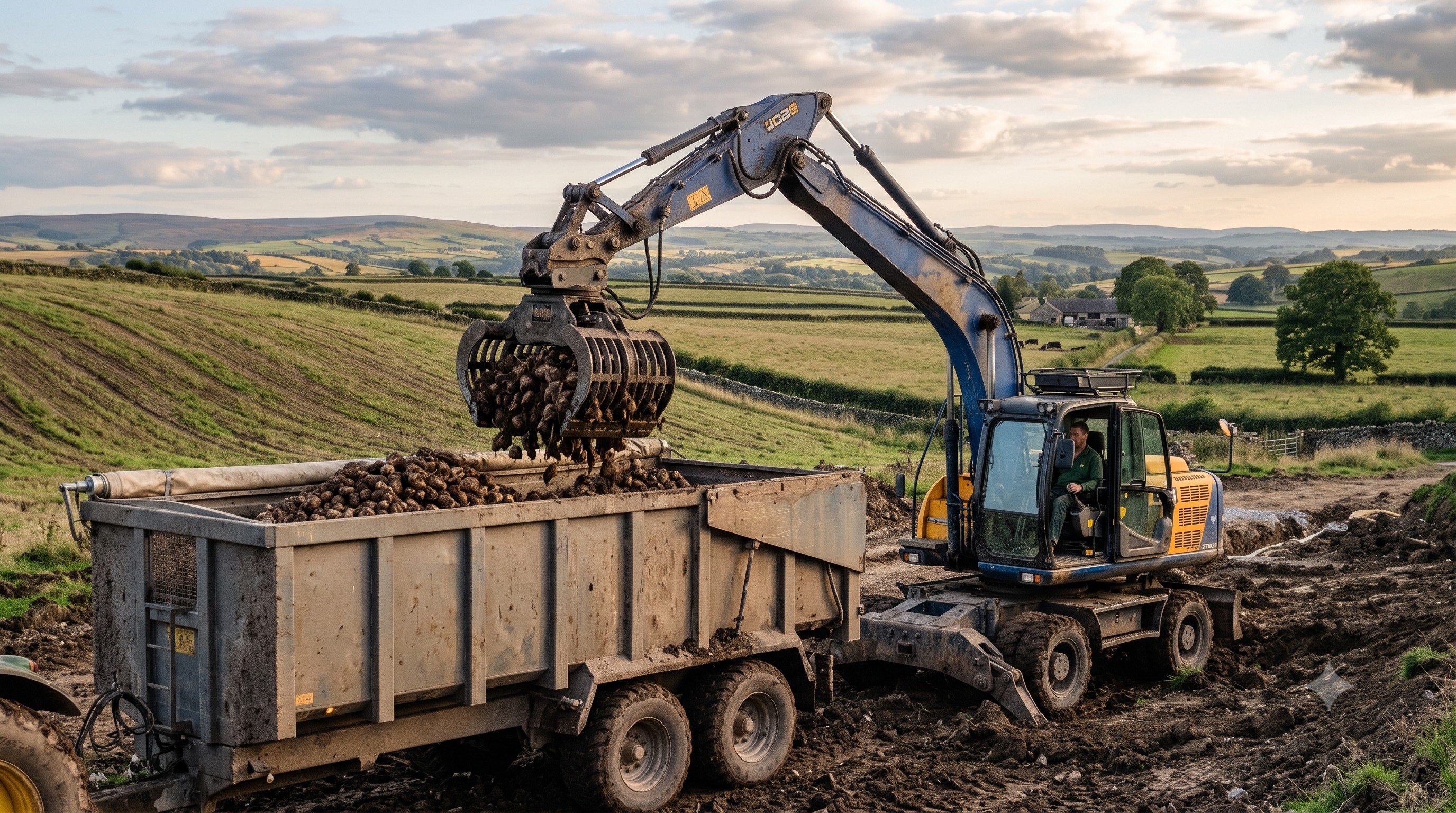
A compelling example of a wheel excavator excelling in rough terrain agriculture is the case of Mauroux Transport in France. The company adapted a Hyundai R210W-9A wheel excavator, operating with a specialized clamshell grab, to pick up sugar beet harvests from fields . The machine, powered by a robust 176 hp engine, features a high hydraulic flow rate and was modified with four stabilizers for stability on uneven fields . The results were transformative: the wheel excavator's efficiency allowed the company to load a 30-tonne truck in four minutes, versus over five minutes with the previous machine, saving approximately one hour per day . This case study directly answers the question of whether a wheel excavator can handle rough terrain in agriculture—it not only handles it but can significantly boost operational efficiency.
General Agricultural Applications
Wheel excavators are increasingly used for a range of tasks:
- Feedlot Management: Loading feed wagons, cleaning pens, and handling manure. Operators report that wheel loaders and excavators provide a smooth ride and can efficiently pick up heavy loads .
- Material Handling: Transporting hay, silage, and other bulk materials across the farm.
- Infrastructure Maintenance: Grading roads, maintaining drainage ditches, and erecting fencing .
Conclusion: A Strategic Asset for Modern Agriculture
So, can a wheel excavator handle rough terrain in agriculture? The evidence suggests a resounding yes, provided the machine is properly specified and operated with best practices in mind. While crawler excavators remain the kings of extreme off-road stability and soft ground, modern wheel excavators offer a compelling blend of mobility, versatility, and cost-effectiveness. With robust powertrains compliant with the latest emission standards, sophisticated hydraulic systems, and features like dual tires and stabilizers to mitigate soil compaction, wheel excavators are a strategic asset for agricultural operations seeking to maximize productivity and ROI. The successful deployment of wheel excavators in demanding tasks like sugar beet harvesting underscores their practical value. For the modern farmer, a wheel excavator is not just a machine; it is a multi-functional tool that enhances efficiency across the entire agricultural enterprise.