

Introduction: The Forestry Challenge and the Compact Solution
In modern land management, the demand for versatile and efficient equipment is at an all-time high. For professionals in industries ranging from forestry and tree care to right-of-way maintenance and site preparation, the question is no longer about the sheer size of the machinery but its ability to perform a wide array of tasks with precision and cost-effectiveness. This brings us to a critical industry debate: Can a compact excavator be used for heavy forestry work?
Historically, forestry operations have been the exclusive domain of large, specialized feller bunchers, skidders, and high-horsepower tracked carriers. However, the evolution of hydraulic systems, structural engineering, and attachment technology has blurred these lines. Advanced compact excavators, particularly those in the 2.5 to 8-ton operating weight classes, are now being equipped with high-flow hydraulics and specialized forestry attachments to take on significant tasks such as mulching, brush clearing, and selective logging.
By integrating a forestry mulcher or other vegetation management tools, a compact excavator transforms from a simple digging machine into a powerful land-clearing instrument. This approach offers distinct advantages in terms of maneuverability and Total Cost of Ownership (TCO) by reducing the need for multiple single-purpose machines on a job site. This blog will provide a highly authoritative, data-driven analysis of the technical specifications, powertrain design, and applications that determine whether a compact excavator is the right choice for your heavy-duty forestry tasks.
Core Powertrain & Structural Design for Forestry Applications
For a compact excavator to survive and perform in the harsh conditions of a forestry environment, it requires more than just a standard construction-grade design. The primary challenges are shock loads from felling trees, impact from debris, and the need for continuous high-power output for hydraulic attachments. This necessitates a focus on reinforced structures and specific powertrain characteristics.
Engine Performance and Emissions Compliance
The engine is the heart of any forestry-capable machine. While not all compact excavators are built for this purpose, the models that succeed typically feature engines with a focus on high torque at lower RPMs and reliability. For instance, machines like the JCB 4TS-8T Teleskid, a compact track loader (CTL) often used alongside excavators in forestry, utilizes a 109-horsepower (hp) JCB EcoMax engine. While a conventional 6-ton mini excavator like the XCMG XE60D has a lower net power, it is engineered for torque output, with a strong hydraulic system and reinforced structures to survive tough conditions.
Crucially, these engines must meet stringent emission standards. Many models operate at EPA Final Tier 4 / EU Stage V compliance levels, often using advanced aftertreatment systems to reduce particulate matter and NOx emissions without sacrificing performance. The integration of a robust cooling package is also non-negotiable for forestry work to prevent overheating during prolonged, high-intensity operations.
Hydraulic System Requirements: High Flow is Key
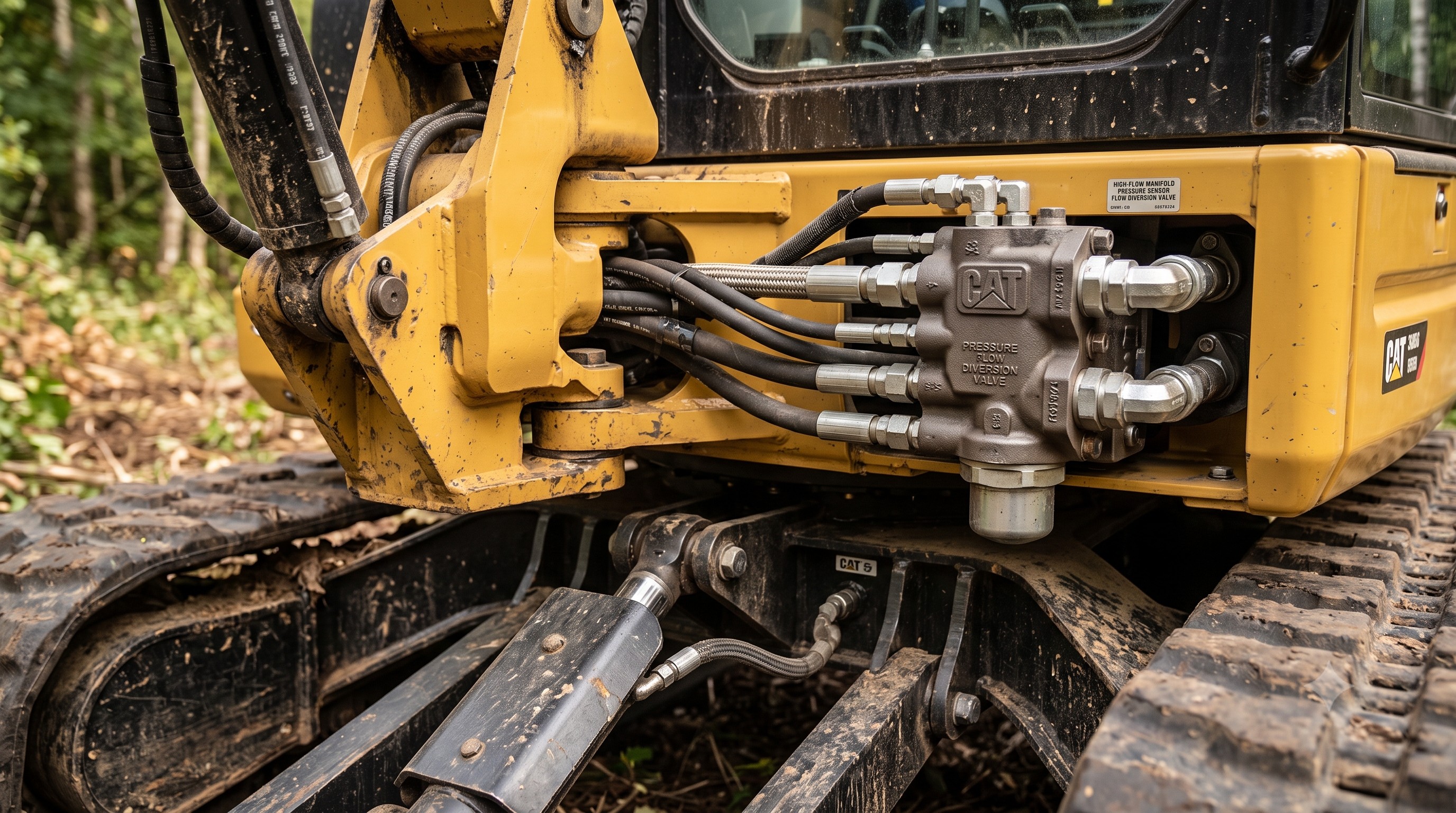
This is the single most critical component for forestry work. Standard excavator hydraulics are often insufficient for heavy mulching attachments. Forestry requires high-flow auxiliary hydraulics to power the rotor motors of mulchers and cutters.
As a benchmark, an excavator like the Mecalac 12MTX features a maximum hydraulic flow of 37 gallons per minute (gpm), which is comparable to high-flow skid steers and CTLs, enabling it to power demanding attachments like asphalt planers and flail mowers. For dedicated forestry applications, JCB's high-flow and "Super Flow" options on their purpose-built CTLs reach up to 42.3 gpm at 4,000 psi for maximum performance. Compact excavators paired with attachments like the SEPPI E10 direct forestry mulcher are designed to operate effectively in the 2.5 to 6-ton range, leveraging a direct drive system for efficient power transmission.
An often-overlooked advantage is hydraulic intelligence. Systems with flow rate memory functions allow operators to save profiles for up to six different attachments, ensuring quick, intuitive switching between a bucket and a mulcher without manual recalibration of the hydraulic settings.
Durability and Frame Reinforcement
Forestry work is abusive. A standard excavator chassis may suffer from vibration and impact damage. Units intended for this work often feature reinforced structures. The XCMG XE60D, for example, is engineered with a strengthened box-type tailstock, upgraded engine brackets, and a high-strength valve bracket specifically to maximize longevity in harsh environments. This robustness is essential to protect the powertrain and undercarriage from flying debris and the stresses of irregular terrain. Furthermore, ROPS/FOPS (Roll Over Protective Structure / Falling Object Protective Structure) certified cabs are vital for operator safety in forestry applications.
Technical Specifications
The table below provides a comparative look at some of the key specifications that determine a compact excavator's suitability for forestry tasks. Note the emphasis on hydraulic flow and structural weight as indicators of capability.
| Key Parameter | Technical Specification |
|---|---|
| Engine Net Power | Varies (e.g., 20.0 hp on John Deere 26G, 109 hp on JCB 4TS-8T) |
| Operating Weight | Varies (e.g., 6,110 lb on John Deere 26G, 2.5 - 8 tons for Fecon attachment compatibility) |
| Max. Hydraulic Flow (High-Flow/Standard) | 37 GPM (Mecalac 12MTX), 42.3 GPM Super Flow (JCB), 39.9 GPM (XCMG XE60D) |
| Engine Emission Standard | EPA Final Tier 4 / EU Stage V Compliant |
| Key Structural Reinforcement | High-strength valve brackets, reinforced boom for impact resistance |
Comparative Advantage: TCO and ROI Analysis
From a financial perspective, choosing a compact excavator for forestry offers significant advantages.
- Reduced Equipment Fleet: A single compact excavator with a quick coupler can dig a trench, lift materials, and, with a mulcher attachment, clear a plot of land. Companies like Mecalac emphasize the 'do more with less' philosophy, which eliminates the need to buy, maintain, and transport multiple specialized machines.
- Lower Transportation Costs: A 20-mph top speed on wheeled variants like the Mecalac 12MTX allows operators to drive between job sites, eliminating the need for a heavy-duty trailer or lowboy for short moves, which is a hidden but significant cost saving.
- Fuel Efficiency & Maintenance: Modern compact excavators are engineered for fuel efficiency. The XE60D, for instance, uses a load-sensitive hydraulic pump to operate in its most fuel-efficient range, lowering daily operating costs. Additionally, using a direct-drive mulching attachment (like the E10 direct) has fewer wear parts compared to traditional belt-driven systems, reducing maintenance downtime.
- Labor Optimization: With labor costs rising, a multi-functional machine that one operator can control reduces crew size and simplifies jobsite management.
Heavy-Duty Application Scenarios in Forestry
Compact excavators are not just for trimming hedges; they are critical for the initial stages of site preparation and right-of-way maintenance.
Precision Mulching and Land Clearing
This is the primary heavy-duty application. Using attachments like the Fecon FMX28 Bull Hog or the SEPPI E10 direct, compact excavators can clear undergrowth, shrubs, and trees up to 4 inches (10 cm) or 5 inches in diameter with surgical precision. The ability to reach over obstacles and into ditches (thanks to a side-mounted boom) allows for precise removal of specific branches or a single tree in a group without disturbing the surrounding environment. This is particularly valuable for maintaining utility lines, trails, and fencerows.
Log Moving and Material Handling
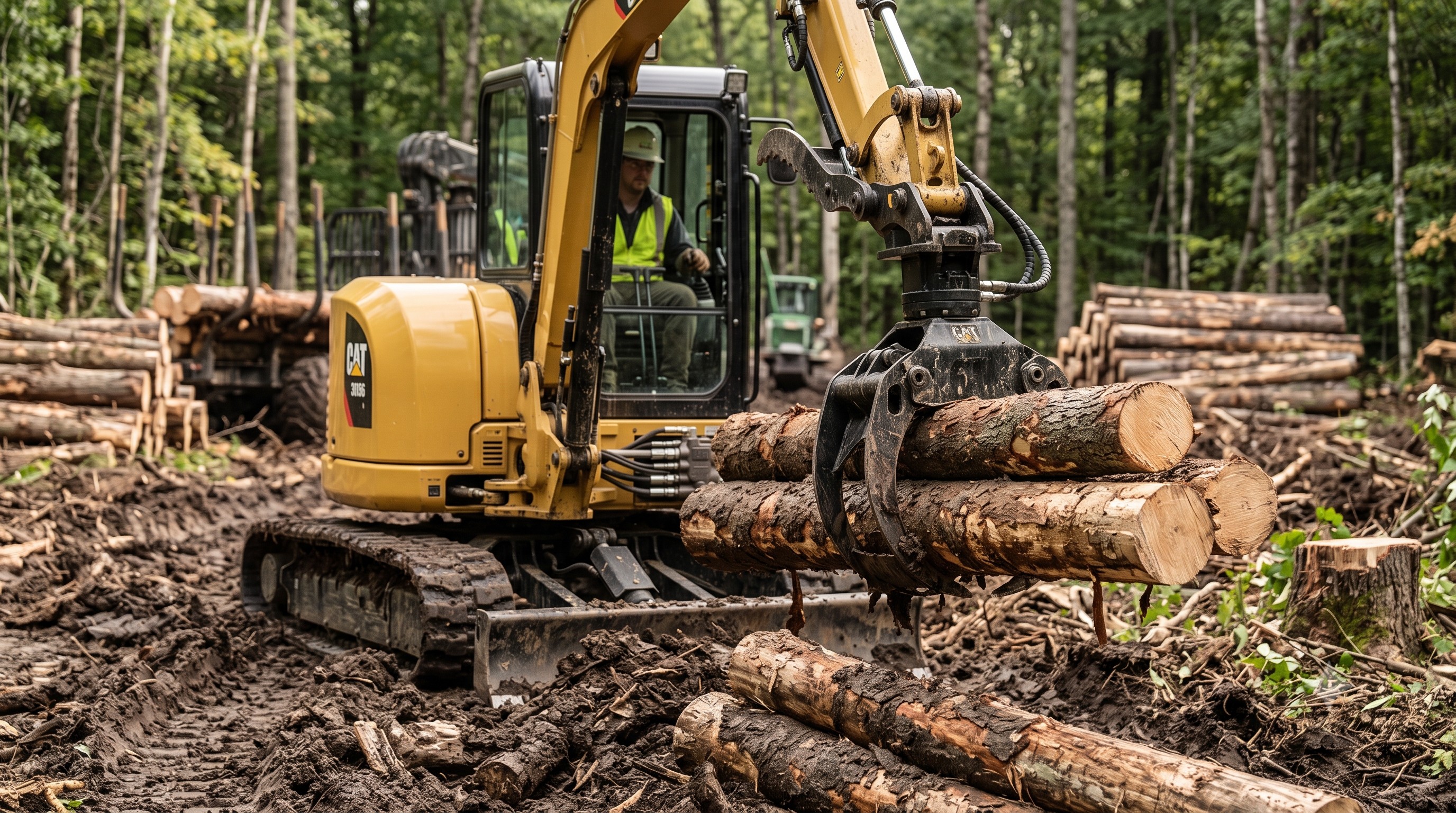
While not a dedicated skidder, a compact excavator equipped with a grapple attachment can effectively handle logs. The machine's lifting capacity—up to 4 tons in some models—allows it to sort, pile, and load logs onto trucks. JCB's 15C-1 operator manual explicitly addresses object handling and log moving as legitimate applications, though it emphasizes the need for correct equipment and caution regarding stability. The use of a telescopic boom, as seen on CTLs like the JCB 4TS-8T, provides 8 feet of forward reach, allowing operators to place loads over obstacles without constantly repositioning.
Road Construction & Maintenance in Forestry
Forestry operations require internal road networks. A compact excavator is ideal for building and maintaining these gravel and dirt roads. It can grade surfaces with the dozer blade, dig drainage ditches, and lift culverts, making it an invaluable tool for supporting the wider logging operation.
Conclusion: A Strategic Asset for Forestry
The question of whether a compact excavator can handle heavy forestry work is no longer a matter of 'if' but 'which one' and 'with what attachments'. The data is clear: modern compact excavators with high-flow hydraulics, reinforced structures, and advanced powertrains are formidable tools in forestry management. They offer a unique combination of precision, power, and cost-efficiency that larger, single-purpose machines cannot match, particularly for tasks requiring maneuverability in tight spaces and a low footprint.
For contractors and land managers, the compact excavator represents a strategic investment that maximizes machine utilization, reduces Total Cost of Ownership (TCO), and enhances Return on Investment (ROI). By selecting a model with the appropriate horsepower, hydraulic flow, and operator safety features, you can effectively tackle demanding forestry applications, from mulching and land clearing to material handling and infrastructure maintenance. The future of forestry work is versatile, efficient, and increasingly driven by smart, compact machinery.