

Introduction: Addressing Modern Material Handling Challenges
In the demanding landscapes of modern construction, mining, and bulk material handling, operational efficiency is directly tied to the performance of the primary loading equipment. Site managers and fleet owners are continuously facing the challenge of balancing powerful digging capabilities against soaring fuel costs, stringent emissions regulations, and the need for minimal downtime. The 8-ton front loader (often classified as an 8-ton wheel loader) emerges as the optimal solution to these industrial pain points. This class of machine provides a 'sweet spot' in the material handling spectrum, offering the brute force traditionally associated with larger classes while delivering the agility and operational cost-efficiency demanded by today's job sites. This technical guide provides a detailed engineering analysis of the 8-ton front loader's powertrain, structural integrity, technical specifications, and a comprehensive breakdown of its total cost of ownership (TCO) to establish why it is the robust workhorse of the heavy equipment industry.
Core Powertrain & Structural Design
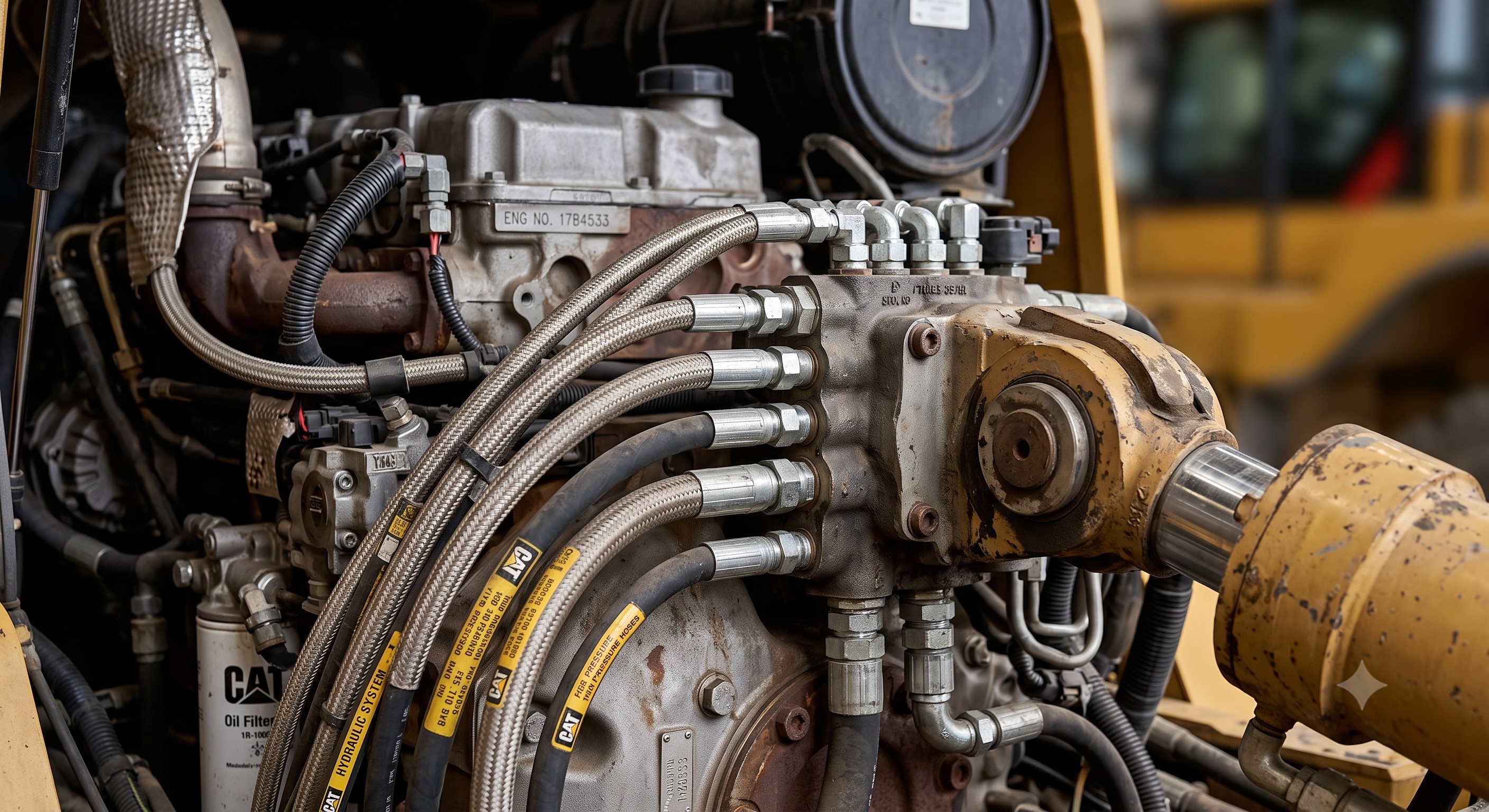
The robust performance of an 8-ton front loader is rooted in its sophisticated powertrain and durable structural engineering. Designed to handle rigorous daily cycles, every component is optimized for power transfer, operator safety, and longevity.
Engine & Emissions Compliance
At the heart of most heavy-duty 8-ton loaders lies a high-torque, low-emission diesel engine. Leading configurations often feature engines like the Cummins QSM11, a 10.8-liter, 6-cylinder power unit that produces upwards of 250 kW (approximately 335 hp) . These modern powerplants are engineered to meet stringent global emissions standards, including EPA Tier 4 Final and EU Stage V, often utilizing advanced aftertreatment systems like Diesel Particulate Filters (DPF) and Selective Catalytic Reduction (SCR) to minimize NOx and particulate matter . This compliance ensures that the loader can operate in regulated environments while maintaining high thermal efficiency. For instance, emerging hybrid powertrain technologies in the 8-ton class demonstrate significant potential, with some configurations achieving a 48% reduction in CO2 and an 84% reduction in NOX emissions over an 8-hour shift compared to internal combustion-only baselines .
Hydraulic System & Efficiency
The hydraulic system defines the machine's breakout force and cycle times. The 8-ton class utilizes sophisticated load-sensing hydraulics that provide flow and pressure on demand, significantly reducing parasitic energy losses . Key specifications often include a hydraulic pump flow rate of around 168 L/min and a rated working pressure reaching up to 190 bar (2,755 psi) . This architecture ensures rapid hydraulic response and high breakout forces, typically around 260 kN, allowing for efficient penetration into dense material piles. The system is designed to deliver fast cycle times, with a standard total cycle time (raise, dump, lower) often clocking in under 11 seconds .
Chassis, Safety & Durability Standards
Durability is paramount in heavy machinery, and the chassis and operator cabin of an 8-ton loader are built to the highest industry standards. The structural integrity and operator safety are governed by international regulations. Critical standards include ISO 3471 for Roll-Over Protective Structures (ROPS) and ISO 3449 for Falling-Object Protective Structures (FOPS) . These standards mandate destructive testing procedures to ensure the cabin can withstand a specified side-load, energy absorption, and longitudinal load without intruding into the operator's Deflection Limiting Volume (DLV) . For example, a ROPS must withstand a minimum lateral load and energy absorption calculated based on the machine's operating weight, ensuring continuous protection throughout the machine's lifecycle .
Technical Specifications
The following table provides a detailed breakdown of critical performance and dimensional data for a standard 8-ton front loader, aggregated from industry-leading models .
| Key Parameter | Technical Specification (Typical Values) |
|---|---|
| Engine Horsepower (Net) | 250 - 313 kW (335 - 420 hp) |
| Operating Weight | 18,300 - 28,500 kg |
| Rated Load Capacity | 8,000 kg |
| Bucket Capacity (Heaped) | 3.5 - 4.5 m³ |
| Breakout Force | 260 kN |
| Hydraulic System Pressure | 18 - 19 MPa (190 bar) |
| Total Hydraulic Cycle Time | ≤ 10.8 seconds |
| Maximum Travel Speed | 35.5 km/h |
| Tire Size | 29.5R25 |
| Engine Model | Cummins QSM11 / Yuchai YC6B125-T20 |
Comparative Advantage: TCO, Fuel Efficiency, and ROI Analysis
When evaluating capital equipment, the initial purchase price is only one component of a much larger financial equation. The 8-ton front loader distinguishes itself through a superior Total Cost of Ownership (TCO) profile, primarily driven by market-leading fuel efficiency and reduced maintenance requirements.
Fuel Efficiency & Operational Costs
Fuel is often the single largest variable operating cost over a machine's lifespan. Modern 8-ton loaders leverage advanced technologies such as variable speed on-demand cooling fans, Engine Idle Management Systems (EIMS), and load-sensing hydraulics to drastically cut consumption . These systems work in concert to ensure the engine operates at peak efficiency only when required, eliminating wasteful fuel burn during idle periods or light-load conditions. Compared to older models, or lower-tier competitors, the 8-ton loader can deliver significant annual fuel savings, which directly translates to a faster payback period for the owner.
Reliability & Maintenance ROI
The 8-ton class is renowned for its reliability, thanks to field-proven components like electronic clutch pressure controlled (ECPC) powershift transmissions . This reliability translates into lower unscheduled downtime, a critical factor for profitability. The long service intervals and readily available parts from global manufacturers (e.g., Cat, John Deere, XCMG) ensure high availability and low maintenance costs .
Heavy-Duty Application Scenarios
The versatility of the 8-ton front loader makes it an indispensable asset across a variety of heavy industries. Its combination of high lifting capacity, robust construction, and agility allows it to excel in the following demanding applications:
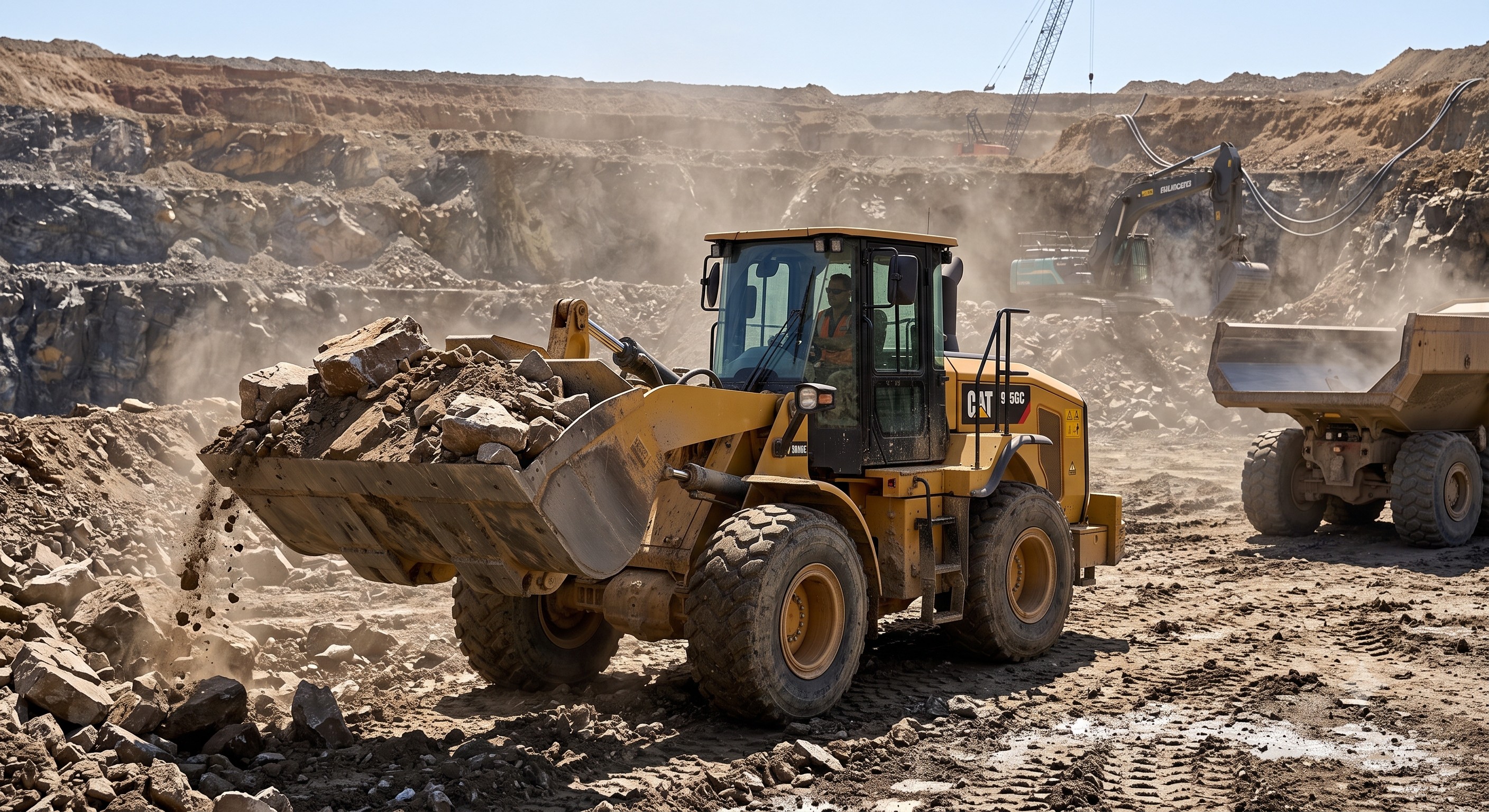
- Large-Scale Construction & Earthmoving: Used extensively for site preparation, backfilling, and loading trucks with aggregates, sand, and gravel. The machine's high dumping height (up to 3.4 meters) allows for easy filling of high-sided dump trucks .
- Mining & Quarry Operations: Equipped with heavy-duty buckets and reinforced guarding, the 8-ton loader is vital for stockpiling ore, feeding hoppers, and loading blasted rock. The high breakout force (260 kN) and rugged tires like the 29.5R25 provide the necessary traction and power for severe mining applications .
- Large-Scale Agriculture & Bulk Material Handling: In agricultural and industrial yards, these loaders efficiently handle silage, fertilizers, and large volumes of bulk raw materials, moving product from storage to processing facilities with rapid cycle times.
- Port & Logistics Operations: Essential for loading and unloading ships, barges, and rail cars, ensuring efficient turnaround times for bulk cargo such as coal, grain, and minerals.
Conclusion: The Future of Industrial Productivity
The 8-ton front loader represents the convergence of brute strength and intelligent engineering. As the industry moves towards greater sustainability and operational efficiency, this class of machinery is poised to lead the charge. The integration of advanced powertrains, such as mild-hybrid and full-electric systems, will only enhance its appeal by further reducing emissions and total lifecycle costs . For any heavy-duty operation looking to optimize productivity while maintaining a sharp focus on the bottom line and regulatory compliance, the 8-ton front loader is not just a purchase; it is a strategic investment in the future of high-yield material handling.