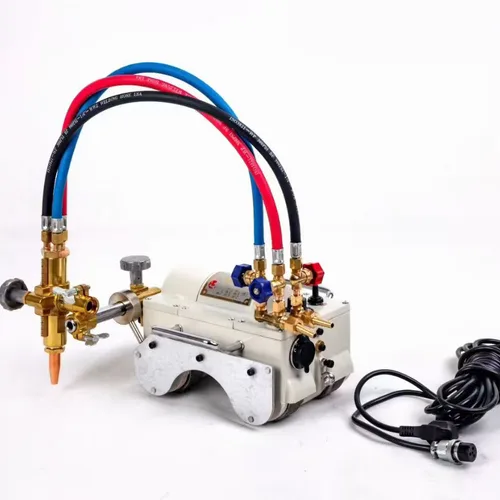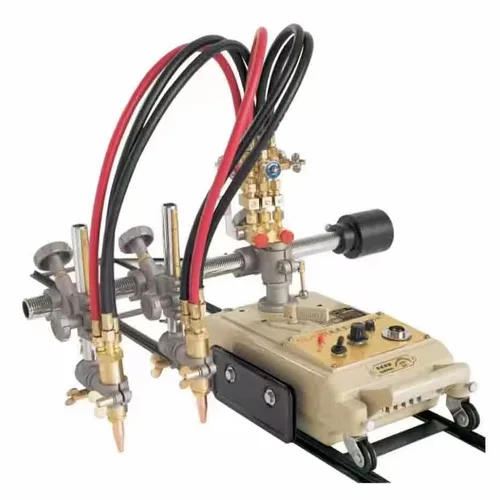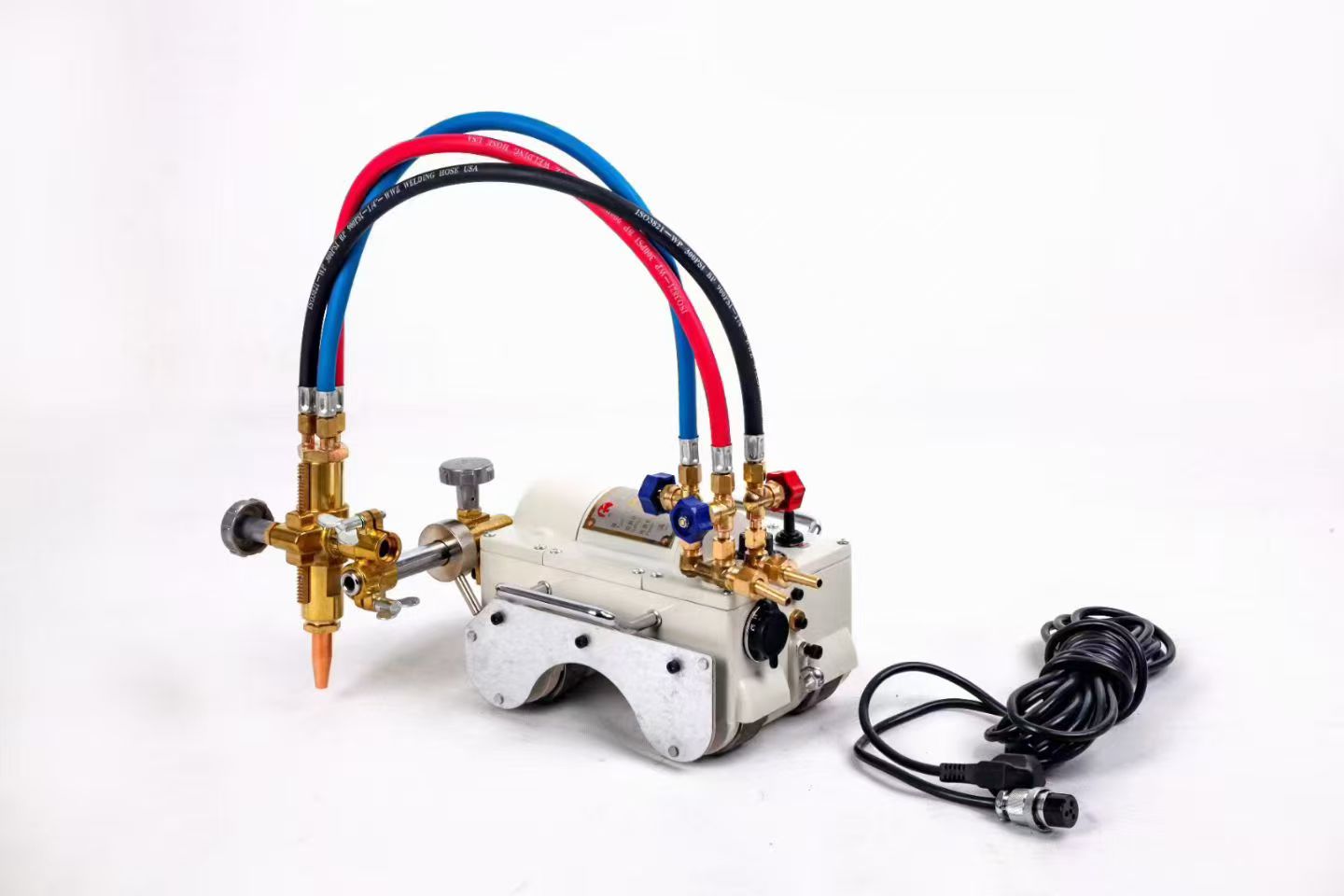
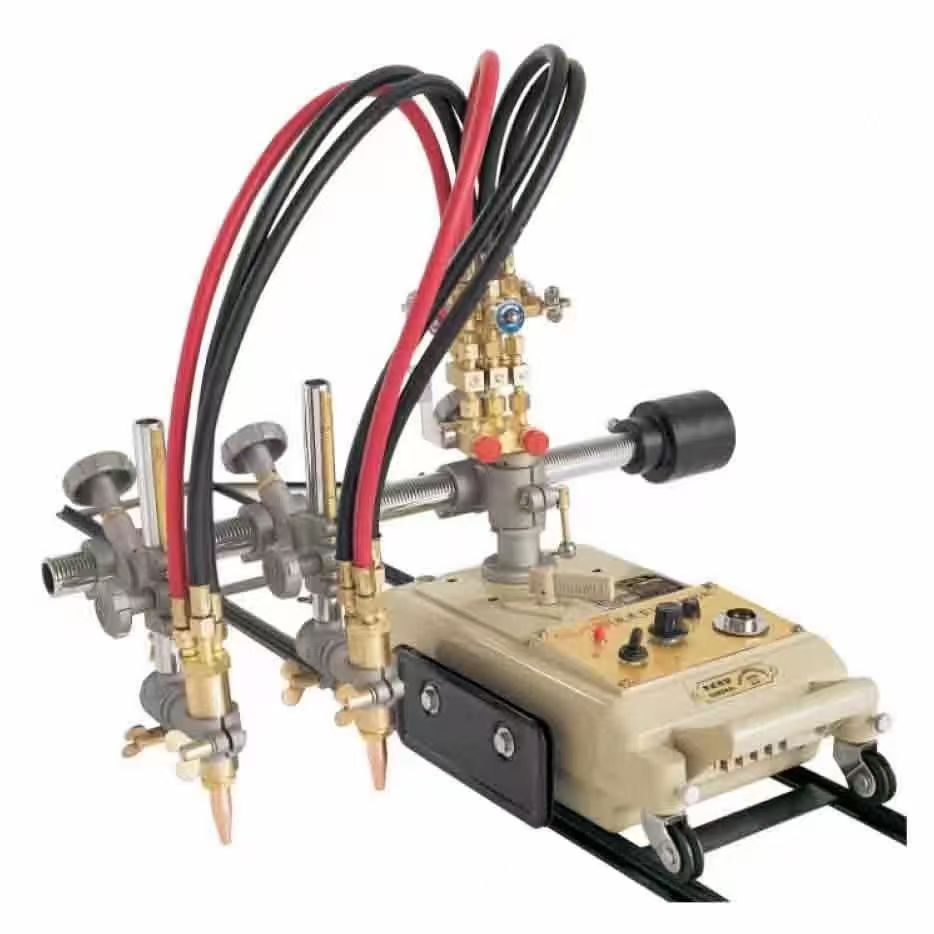
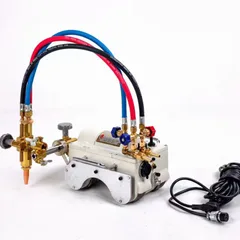
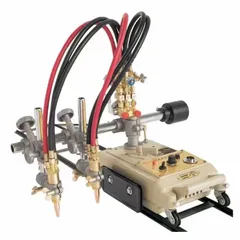


This is the CG1 series semi-automatic flame cutting machine (commonly known as "Little Turtle"), available in the CG1-30 single-torch basic model and the CG1-100 dual-torch high-efficiency model. It is a classic tool for construction steel structure fabrication and steel plate blanking. Moving linearly along a track, it performs straight cuts, bevel cuts, or double parallel cuts on steel plates using flame cutting, compatible with acetylene/propane gas. It offers stable cutting speed and clean cuts, serving as an efficient alternative to manual gas cutting.
The CG1 series semi-automatic flame cutting machine, commonly known as "Little Turtle", is a foundational tool for steel structure fabrication, available in the CG1-30 single-torch model and CG1-100 dual-torch model. Motor-driven to move at a constant speed along rails, it performs straight or bevel cuts on steel plates using flame cutting. Compared to manual gas cutting, it offers uniform speed, high cut perpendicularity, and minimal slag, significantly improving blanking efficiency and precision.
2. Model Differences and Core Advantages
CG1-30 (Single Torch): The basic model with 1 torch, suitable for single straight cuts. Simple to operate, it is an entry-level semi-automatic cutting device ideal for small-to-medium steel plate blanking.
CG1-100 (Dual Torch): The high-efficiency model with 2 independently adjustable torches, capable of simultaneously cutting two parallel lines or symmetric bevels, doubling the efficiency of the single-torch model. It is suitable for batch steel plate blanking and H-beam web cutting.
Common Advantages: Infinitely variable travel speed adapts to different cutting thicknesses and materials; adjustable torch angle enables 0-45° bevel cutting; compatible with multiple gases such as acetylene/propane, requiring only matching nozzles, resulting in low cost and easy maintenance.
3. Operation and Usage Recommendations
Place the machine on a straight rail during installation, checking the fit of the drive wheels to ensure smooth travel.
Select the appropriate nozzle size based on the cutting thickness, adjust gas and oxygen pressures, ignite the flame for preheating, then start the machine.
Maintain a consistent distance between the torch and the workpiece during cutting to avoid workpiece deformation or flame deviation.
Regularly clean the rails and gear transmission mechanism, and apply lubricating oil to prevent jamming that affects cutting precision.
4. Application Scenarios
Widely used in steel structure factories, machining workshops, and construction sites, it performs straight blanking, bevel processing, and H-beam cutting on carbon steel and low-alloy steel plates, serving as an efficient, low-cost steel plate cutting tool in construction projects.
The CG1 series semi-automatic flame cutting machine, commonly known as "Little Turtle", is a foundational tool for steel structure fabrication, available in the CG1-30 single-torch model and CG1-100 dual-torch model. Motor-driven to move at a constant speed along rails, it performs straight or bevel cuts on steel plates using flame cutting. Compared to manual gas cutting, it offers uniform speed, high cut perpendicularity, and minimal slag, significantly improving blanking efficiency and precision.
2. Model Differences and Core Advantages
CG1-30 (Single Torch): The basic model with 1 torch, suitable for single straight cuts. Simple to operate, it is an entry-level semi-automatic cutting device ideal for small-to-medium steel plate blanking.
CG1-100 (Dual Torch): The high-efficiency model with 2 independently adjustable torches, capable of simultaneously cutting two parallel lines or symmetric bevels, doubling the efficiency of the single-torch model. It is suitable for batch steel plate blanking and H-beam web cutting.
Common Advantages: Infinitely variable travel speed adapts to different cutting thicknesses and materials; adjustable torch angle enables 0-45° bevel cutting; compatible with multiple gases such as acetylene/propane, requiring only matching nozzles, resulting in low cost and easy maintenance.
3. Operation and Usage Recommendations
Place the machine on a straight rail during installation, checking the fit of the drive wheels to ensure smooth travel.
Select the appropriate nozzle size based on the cutting thickness, adjust gas and oxygen pressures, ignite the flame for preheating, then start the machine.
Maintain a consistent distance between the torch and the workpiece during cutting to avoid workpiece deformation or flame deviation.
Regularly clean the rails and gear transmission mechanism, and apply lubricating oil to prevent jamming that affects cutting precision.
4. Application Scenarios
Widely used in steel structure factories, machining workshops, and construction sites, it performs straight blanking, bevel processing, and H-beam cutting on carbon steel and low-alloy steel plates, serving as an efficient, low-cost steel plate cutting tool in construction projects.