WELCOME TO OUR BLOG

We're sharing knowledge in the areas which fascinate us the most
click

Tanker Truck Types: What Hauls What and Why It Matters

By globalmachex April 7th, 2026 12 views

Quick Intro—Why You Can't Use One Tank for Everything


A tank is a tank, right? Stainless steel, holds liquid, what's the difference?

The difference is what that liquid does to the tank and what the tank does to the liquid.

Some products need pressure. Some need insulation. Some eat through regular steel. Some have to be kept absolutely clean. Some explode if they're not grounded. You can't put something that needs pressure in a tank built for open air. You can't put acid in a tank that isn't lined. You can't put food oil in a tank that just hauled chemicals.

The tank has to match the cargo. Every time.

Answering the Main Question


The Tank Types and What Goes in Them

Non-Pressurized Liquid Tanks

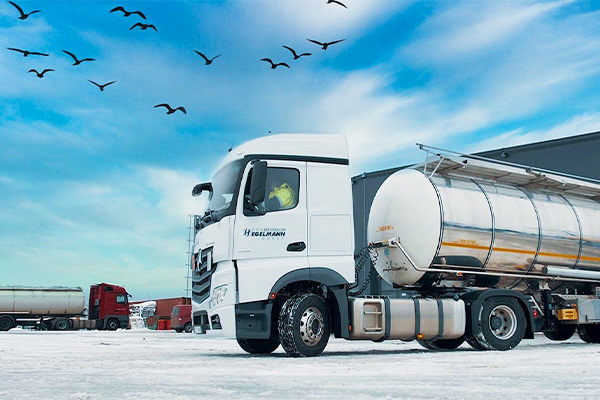
These are the ones you see most often. Gasoline, diesel, jet fuel—anything that flows and doesn't need pressure . They're divided into compartments so the liquid doesn't slosh around and flip the truck .

They're not insulated. They're not pressurized. They just hold liquid and keep it from spilling.

Low-Pressure Chemical Tankers

These are for stuff that's a little more sensitive. Solvents, lubricants, mild corrosives, some flammables . They can also handle food-grade liquids if they're cleaned right—vegetable oil, syrup, that kind of thing .

They're built to handle a bit of pressure, but not much. And they have to be compatible with whatever chemical is inside.

Corrosives Tanks

Now we're in dangerous territory. Sulfuric acid, nitric acid, sodium hydroxide—these will eat through regular metal like it's nothing .

These tanks have special linings to protect the steel. If that lining fails, the tank fails. And if the tank fails, everything around it has a very bad day.

Compressed Gas Tanks

These are the ones that look like big cigars. Propane, butane, anhydrous ammonia, chlorine . The product isn't liquid at normal pressure—it's gas. So they pressurize it until it turns liquid, then haul it that way .

If these tanks rupture, you don't get a spill. You get a gas cloud that can burn, suffocate, or poison.

Cryogenic Liquid Tanks

These are for stuff that's only liquid at extremely low temperatures. Liquid oxygen, nitrogen, argon, hydrogen, CO₂ . The tanks are heavily insulated—like giant thermoses—to keep everything cold .

If the insulation fails, the liquid boils and pressure builds. That's why they have pressure relief valves.

High-Pressure Tube Trailers

These look different—banks of long tubes instead of one big tank. They carry high-purity gases like helium, nitrogen, oxygen, argon at very high pressure .

The tubes are thick steel, built to hold thousands of pounds of pressure. Not something you want to rear-end.

Dry Bulk / Pneumatic Hopper Trailers

Not technically liquid, but still hauled in tanker-style rigs. Cement, lime, sand, plastic pellets, fertilizer . They use air pressure to blow the product out through hoses.

Some are sanitary—for flour, sugar, food powders. Those have to be kept spotless.

The Safety Stuff That Keeps It From Going Wrong

Baffles

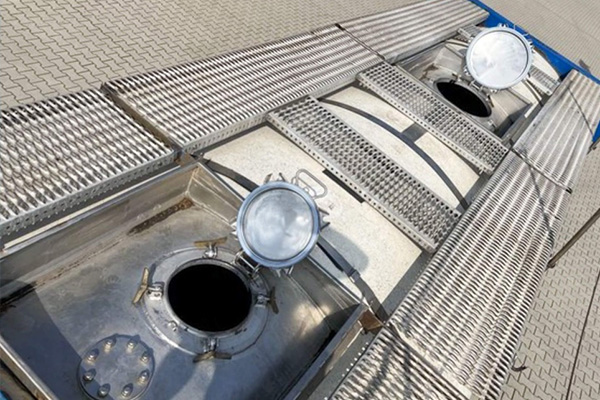
Remember sloshing from the last article? Baffles are what stop it . Plates inside the tank with holes in them. They break up the liquid's movement so it doesn't build momentum and flip the truck .

Liners

For corrosive stuff, the tank itself isn't enough. They add a liner—a protective layer inside that keeps the acid away from the steel . Without it, the tank would dissolve from the inside out.

Vapor Recovery

When you load gasoline, vapors get pushed out. You don't want those in the air—they smell, they pollute, they explode. Vapor recovery systems capture them and put them back in the tank .

Overfill Protection

Tanks have sensors that stop the flow when they're full . If those fail, you get a spill. And with fuel, a spill is a fire waiting to happen.

Pumps and Metering

Moving liquid in and out takes pumps. And if you're selling it, you need to know how much. Meters track every gallon, every pound .

Grounding

Static electricity builds up when liquid flows through pipes. If that static sparks, you've got a fire. Grounding systems bleed off that charge safely .

How to Actually Pick the Right Tanker


Step One: Know Your Product

What are you hauling? Flammable? Corrosive? Pressurized? Cryogenic? Food-grade? The product dictates the tank. Full stop.

Step Two: Know Your Regulations

The DOT and PHMSA have rules for every type of hazardous material . Tank design, testing, markings—all of it is regulated. If your tank isn't certified for the product, it's illegal to haul it.

Step Three: Match the Tank to the Cargo

  • Gasoline, diesel, jet fuel → non-pressurized liquid tank.
  • Solvents, lubes, mild chemicals → low-pressure chemical tanker.
  • Sulfuric acid, nitric acid → corrosives tank with liner.
  • Propane, butane → compressed gas tank.
  • Liquid oxygen, nitrogen → cryogenic tank.
  • Helium, hydrogen → high-pressure tube trailer.
  • Cement, sand, plastic pellets → dry bulk pneumatic trailer.

Step Four: Check the Safety Systems

Does it have baffles? Liners? Vapor recovery? Overfill protection? Grounding? If you're hauling something that needs it and it's not there, you're gambling.

Summary


Here's the short version for when you're looking at tankers trying to figure out what goes where:

  • Non-pressurized tanks: gasoline, diesel, jet fuel.
  • Low-pressure chemical tanks: solvents, lubes, mild corrosives.
  • Corrosives tanks: acid, caustics—with liners.
  • Compressed gas tanks: propane, butane, ammonia.
  • Cryogenic tanks: liquid oxygen, nitrogen—super cold.
  • Tube trailers: high-pressure gases like helium.
  • Dry bulk: cement, sand, plastic pellets.
  • Baffles stop sloshing.
  • Liners protect against corrosion.
  • Vapor recovery keeps fumes in.
  • Overfill protection prevents spills.
  • Grounding stops static sparks.

The tank has to match the cargo. Not close enough. Exactly. Anything less is a disaster waiting to happen.

Frequently Asked Questions

Q: Can the same tanker haul gasoline and diesel?

A: Yes, usually. They're both non-pressurized liquids. But you have to clean it out if you're switching to something different .

Q: What happens if you put acid in a tank without a liner?

A: The acid eats through the steel. Eventually, it leaks. Possibly catastrophically .

Q: Why do some tankers have multiple compartments?

A: So they can haul different products at once, and to reduce sloshing .

Q: How do you clean a tanker between loads?

A: Depends on what was in it. Water wash, solvent wash, steam cleaning. Food-grade loads need serious cleaning .

Q: What's the most dangerous tanker to be around?

A: Probably compressed gas or cryogenic. If they fail, you don't just get a spill—you get a explosion or a gas cloud .

Q: Do all tankers need grounding?

A: For flammable liquids, yes. Static electricity is real, and it will light a fire if you give it a chance .

High-Vis Gear: The Difference Between Seen and Scene
Previous
High-Vis Gear: The Difference Between Seen and Scene
Read More
Truck Tire Blowouts: Why They Happen and How Not to Die When They Do
Next
Truck Tire Blowouts: Why They Happen and How Not to Die When They Do
Read More